

After signing the Lindsay O’Graham Act, the president can impose targeted tariffs of up to 100% on five major countries buying Russian oil and gas, according to a report.
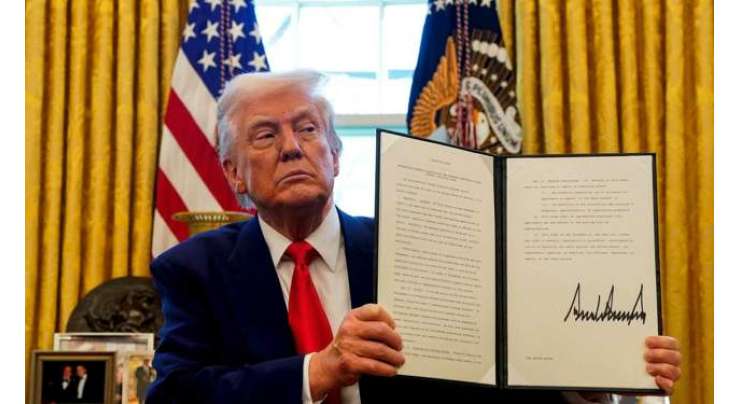
WASHINGTON, (UrduPoint / Pakistan Point News – 19th Sep, 2026) US President Donald Trump has signed the new Lindsay O’Graham Act 2026 concerning sanctions against Russia and Iran, granting the president authority to impose tariffs of up to 100% on certain countries purchasing Russian oil and gas.
According to the White House, President Trump signed H.R.
5334 on 18th Sep, 2026. The law expands the scope of legal sanctions, tariffs and other restrictions against Russia and extends existing sanctions on Iran.
Under the law, the US president can impose targeted tariffs of up to 100% on the five largest buyers of Russian crude oil or natural gas, as well as five major countries helping others evade sanctions related to Russian oil.
However, the law does not automatically impose a 100% tariff on any country; it grants the president the authority to take such action.
India and China are among the major buyers of Russian crude oil, making the potential application of US tariffs against them a significant issue under the new law.
However, it would not be accurate at present to say that 100% tariffs have been imposed on either India or China.
The law authorizes the president to impose import duties on countries meeting specific criteria, while the actual rate and the countries targeted will depend on future administration decisions.
The new law also targets Russian officials, financial institutions, individuals and entities linked to the defense sector, and Russia’s so-called “shadow fleet.” The term refers to a network of vessels that Western officials say is used to transport Russian energy exports and evade sanctions.
The law also allows action against foreign individuals and entities that assist Russian energy production or efforts to circumvent sanctions.
Another key provision extends the Iran sanctions law for five years, thereby maintaining the legal framework for US sanctions related to Iran’s energy and certain other sectors.
The law also allows exemptions from sanctions or tariffs in certain circumstances.
If specific conditions are met, the president may certify to Congress, on national-interest grounds, that an exemption from certain measures should be granted.
The law contains an exemption provision for certain countries purchasing Russian natural gas, particularly those accounting for less than 15% of Russia’s total gas exports and taking significant steps to reduce their dependence on Russian gas.
The legislation was first approved by the US Senate and then by the House of Representatives.
The Senate passed it in August by 86 votes to 11, while the House approved it on 16th Sep by 262 votes to 159. Following President Trump’s signature, the law became part of the effective legal framework.
The law’s immediate economic impact will depend on the extent to which the US administration uses its tariff powers and which countries are targeted in practice.
If tariffs are imposed on India and China, the effects on global energy trade, purchases of Russian oil and both countries’ trade relations with the United States could become significant.