


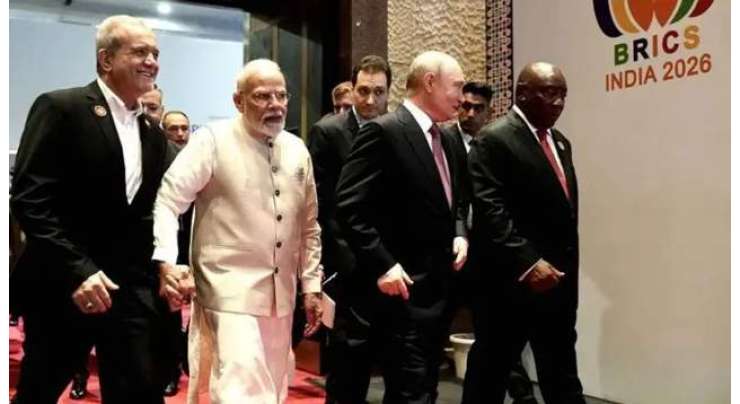
The bloc criticized unilateral tariffs, non-tariff measures and sanctions, while stressing the need for a fairer, more balanced and inclusive global trading system.
NEW DELHI, (UrduPoint / Pakistan Point News – 12th Sep, 2026) At the 18th BRICS Summit, member states expressed deep concern over the ongoing war and rising tensions in the middle East, calling for maximum restraint, urgent diplomatic efforts, negotiations and the resolution of disputes through political and diplomatic means.
During the summit in New Delhi, BRICS countries reached agreement on key issues concerning global peace, energy security, trade, counterterrorism and the role of developing countries in the global system.
International media reports said the joint BRICS declaration came as the situation in the Middle East remained tense, with growing military operations creating new risks for global peace, the world economy and energy markets.
In the New Delhi Declaration, BRICS countries expressed deep concern over rising tensions in the Middle East and urged all parties to exercise maximum restraint.
The declaration said a lasting solution to the current crisis should be pursued through negotiations, consultations, diplomacy and political means rather than military action.
BRICS stressed that any further escalation could have serious consequences for the people of the region as well as global peace and security.
Importantly, the joint declaration avoided directly holding any one party responsible for the Middle East conflict, a move being viewed as significant in the context of the differing political and regional positions within BRICS.
The New Delhi Declaration also expressed concern over the situation in Palestine.
BRICS countries reiterated their support for a ceasefire in Gaza, the delivery of humanitarian aid and the political rights of the Palestinian people. The declaration supported the establishment of a Palestinian state and stressed the need for a just and lasting solution to the Palestinian issue.
Respect for the sovereignty of states and regional security was also described as important.
The BRICS summit also voiced concern over growing pressure on global trade and unilateral trade measures.
The declaration criticized unilateral tariffs, non-tariff measures and sanctions that could affect the economies of developing countries. BRICS stressed the need to make the global trading system fairer, more balanced and inclusive, saying developing countries should receive adequate representation in global economic policymaking.
Against the backdrop of tensions in the Middle East, energy security also featured prominently in the New Delhi Declaration.
BRICS countries emphasized the need for stable global energy markets, stronger supply chains and the protection of vital energy infrastructure. The declaration also acknowledged that fossil fuels would continue to play an important role in meeting the energy needs of developing countries in the near future.
Experts said a prolonged war in the Middle East could disrupt global oil and gas supplies, potentially causing further increases in inflation, energy costs and import bills in developing countries.
The New Delhi Declaration also supported more effective representation for developing countries in global decision-making.
BRICS stressed the need to reform global institutions and the international financial system, saying existing global institutions should become more representative and inclusive in line with changing global economic realities.
The joint BRICS declaration was issued as the world faces the Middle East war, trade tensions, an energy crisis and growing disagreements among global powers.
BRICS’ joint position indicates that emerging economies are seeking to further strengthen their collective role in global conflicts and economic policymaking.
The core message of the BRICS declaration was clear: diplomacy instead of war, multilateral cooperation instead of unilateral measures, and a more effective role for developing countries in global decision-making.