


Says attacks targeting GCC countries demonstrate that Gulf security and stability are ‘indivisible’
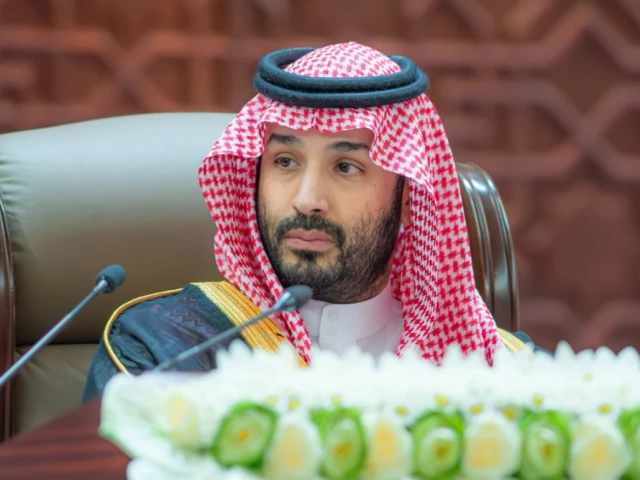
Saudi Crown Prince Mohammed bin Salman speaks at the Shura Council on Wednesday. SAUDI PRESS AGENCY
Saudi Crown Prince Mohammed bin Salman (MBS) on Wednesday said that the Makkah defence pact with Türkiye and Pakistan aimed to bolster regional stability and shield the region from tensions and conflicts.
Signed by Türkiye, Pakistan and Saudi Arabia on August 7, the pact is based on the principles of shared responsibility and regional ownership amid growing regional and global instability. The agreement aims to promote security, peace, stability and prosperity while strengthening collective deterrence.
MBS made the remarks while delivering the annual royal address on behalf of King Salman bin Abdulaziz during the opening of the third year of the ninth session of Saudi Arabia’s Shura Council.
Read: Makkah pact military chiefs condemn attacks on holy city at Riyadh meeting
“To strengthen regional stability, shield it from the repercussions of tensions and conflicts, and coordinate efforts, the Makkah Defence Alliance was established between the kingdom, Türkiye and Pakistan,” the crown prince said.
#BREAKING: Crown Prince: As part of our efforts to strengthen regional stability and shield the region from tensions and conflicts, the Makkah Defense Alliance was established between Saudi Arabia, Turkey and Pakistan to enhance security and stability in the region. pic.twitter.com/mrV6ijuqdR
— Saudi Gazette (@Saudi_Gazette) September 30, 2026
He said attacks targeting Gulf Cooperation Council (GCC) countries demonstrated that Gulf security and stability were “indivisible”.
MBS said Saudi Arabia was working with fellow GCC countries to safeguard them.
The crown prince said the kingdom was making every possible effort to de-escalate tensions without compromising its security.
“We will not hesitate to respond firmly to any threat or attack aimed at undermining our security,” he said.
Read More: Saudi Arabia warns escalating Middle East threats risk global trade, energy security
MBS also said the establishment of a “multinational defensive maritime coalition” was aimed at strengthening maritime security and protecting common interests in international waterways.
He rejected the use of international waterways as a tool for political or economic pressure.
Mohammed bin Salman:
As part of our contribution to strengthening regional stability, shielding the region from the consequences of tensions and conflicts, and coordinating efforts, the Makkah Defense Alliance was established between the Kingdom, the Republic of Türkiye and the… pic.twitter.com/20c9HHmEhj
— Clash Report (@clashreport) September 30, 2026
The crown prince also warned that “the world today is facing an energy crisis open to all possibilities.”
He also condemned Israel’s “brutal attacks” against Palestinians in the Gaza Strip and its “repeated violations” of Al-Aqsa Mosque.
MBS further called on the international community and the Board of Peace to play their roles in reaching a lasting political solution in Palestine.
Background of Makkah pact
The Makkah pact is the latest step in longstanding military and strategic cooperation between Pakistan, Saudi Arabia and Turkiye. Signed in Makkah, the pact established a framework for collective deterrence and stipulated that an armed attack on any one of the three countries would be considered an attack on all three, while providing for wider cooperation across defence.
Also Read: Pakistan, Saudi Arabia, Turkiye sign joint defence pact in Makkah
The agreement followed nearly a year of negotiations and came amid heightened instability across the Middle East. Turkiye and Pakistan had sought closer regional security cooperation, while Saudi Arabia had faced growing security concerns as conflicts spread across the region, threatening its territory, energy infrastructure and ambitious economic development plans.
For Pakistan and Saudi Arabia, the trilateral pact is built on their Strategic Mutual Defence Agreement signed in September 2025. That agreement stated that “any aggression against either country shall be considered an aggression against both” and committed the two sides to strengthening defence cooperation and joint deterrence.
The three countries already had extensive military links. Pakistan had provided training and technical assistance to Saudi forces for decades, while Islamabad and Ankara had maintained close defence ties through military training, naval cooperation and defence equipment. In 2023, Saudi Arabia agreed to purchase Turkish drones in what Ankara described as its largest defence export contract.
Pakistan had also expanded its military and security cooperation with the kingdom, deploying about 8,000 troops, fighter jets, drones and an air-defence system to Saudi Arabia, according to Reuters. Islamabad had also been pursuing wider security and economic ties in the Gulf, including negotiations with Kuwait on an expanded cooperation pact linked to energy and investment.
The signing in Makkah, Islam’s holiest city, added symbolic weight to an agreement that brought together three countries with significant military and strategic capabilities. It also came as Pakistan sought to avoid becoming directly involved in the Iran conflict, instead pursuing diplomatic efforts to mediate, while strengthening its broader regional security partnerships.