

- Iran war has raised fuel prices, adding to pressure on household budgets
- US consumer confidence falls to near 12-and-a-half-year low in Sept.
- Diesel prices recently hit a record $6.53 per gallon, according to AAA.
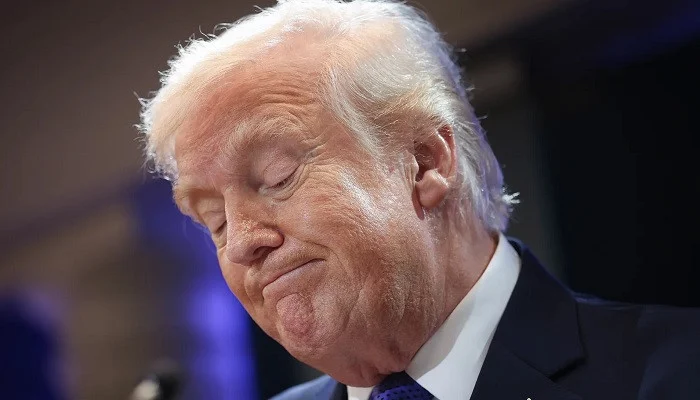
US President Donald Trump acknowledged on Wednesday that he has failed to effectively explain his economic record to voters, as the war with Iran drives up fuel costs and growing economic anxiety threatens to overshadow his message ahead of November’s congressional elections.
“I’ve done a very bad job of explaining how good the country is doing,” Trump told a Hispanic Heritage Month event at the White House, while insisting that “the country’s doing better than it has ever done.”
Trump’s comments came as he prepares for a 32-day campaign push for Republican candidates in the November 3 midterm elections, with control of Congress at stake.
The president’s economic message faces a difficult backdrop. The war with Iran has disrupted energy supplies and sent US gasoline and diesel prices sharply higher, while consumer confidence plunged in September to its lowest level in nearly 12 and a half years.
Reuters/Ipsos polling earlier this month found Trump’s overall approval rating at 32%, his lowest of either of his presidential terms, with only 17% of respondents approving of his handling of the cost of living. The poll also found that dissatisfaction over inflation had spread to Republican voters.
The economic pressure has been particularly visible at the pump. Diesel prices recently reached a record $6.53 a gallon, according to AAA data cited by Reuters, while states across the country have taken measures to try to contain fuel costs amid supply disruptions linked to the Iran war, attacks on Russian refineries and declining global inventories.
Oil prices also rose on Wednesday as US-Iran talks stalled and fuel markets tightened. Brent crude settled at $103.50 a barrel, up 91 cents on the day and about 14% for September, while US West Texas Intermediate settled at $90.42.
The White House has been under pressure to limit the domestic economic fallout from the conflict. Reuters reported in May that administration officials were considering measures including a possible suspension of fuel taxes as gasoline prices surged and hopes for a quick end to the war faded.
Yet the broader US economy has continued to show areas of strength. The economy grew at a revised annualised rate of 2.2% in the second quarter, with consumer spending rising 3.8%, according to government data reported by Reuters. Business investment linked to artificial intelligence infrastructure has also helped support growth.
That contrast is at the heart of Trump’s argument: he says the underlying economy is strong but that his administration has failed to communicate its achievements effectively.
“We’re not getting the word out,” Trump said at the White House event. “I’m going out because nobody’s selling it. We’re doing an extremely poor job of promotion, and an extremely great job of running the country. But we’ll get the word out. It should not be hard.”
Trump also acknowledged the historical difficulty facing presidents in midterm elections, noting that the party occupying the White House typically loses congressional seats in the first election after a presidential vote.
“We have to turn this around,” he told supporters.
His campaign schedule reflects the urgency of the coming weeks. Trump is due to travel to Texas and Oklahoma on Thursday, visit Alabama on Friday and campaign in Ohio on Saturday as Republicans pour resources into races that were previously considered relatively safe.
The Iran war has become an increasingly prominent issue in those contests. Reuters reported last week that Republican candidates in several states have begun distancing themselves from Trump’s Iran policy as voters confront higher food and fuel costs and questions about the war’s duration.
Trump’s latest comments come as Washington and Tehran remain engaged in diplomatic efforts. Iranian Foreign Minister Abbas Araqchi has received US feedback through Qatari mediators on a seven-day trust-building proposal that includes steps towards reopening the Strait of Hormuz, although differences remain over the sequence and conditions for implementing the plan.