


Information ministry says Taliban statements seeking to blame Pakistan for fighting reflect ‘despair and frustration’
The Ministry of Information on Wednesday rejected the Afghan Taliban minister’s allegations against Pakistan as “self-rhetorical lies”, saying the statements aimed at externalising the regime’s internal problems reflected its “despair and frustration” in dealing with its own issues.
Fighting between the Afghanistan Freedom Front and the Taliban resumed on Tuesday morning, Sept 29, in Nuristan’s Kamdesh district, Afghanistan International reported citing informed sources, adding that the clashes began with a Taliban attack.
Meanwhile, the Taliban Defence Ministry said its operation against armed opponents in Kamdesh had ended, claiming that 41 people were killed and 62 others detained.
In a statement posted on X, the ministry’s fact-checking account described the latest allegations by the Taliban’s “so-called Minister for Borders” and other “mouthpieces” as “self-rhetorical lies” aimed at diverting attention from what it called serious internal oppression, dissent and instability.
Calling the Afghan Taliban a “non-inclusive and non-representative regime”, the ministry said it had imposed itself on the Afghan people through “force and oppression”.
𝐅𝐚𝐜𝐭 𝐂𝐡𝐞𝐜𝐤 | 𝐌𝐢𝐧𝐢𝐬𝐭𝐫𝐲 𝐨𝐟 𝐈𝐧𝐟𝐨𝐫𝐦𝐚𝐭𝐢𝐨𝐧 & 𝐁𝐫𝐨𝐚𝐝𝐜𝐚𝐬𝐭𝐢𝐧𝐠
◼️ The latest allegations by so called Minister for Borders and other mouthpieces of the Taliban regime seeking to attribute the fighting in Nuristan to Pakistan are self rhetorical… pic.twitter.com/S4z5EYre5K
— Fact Checker MoIB (@FactCheckerMoIB) September 30, 2026
“These comical statements to externalise their internal issues and follow-up rhetoric directed towards Pakistan actually reflect the despair and frustration in handling their own issues,” it said.
The ministry further said the Taliban remained “willingly oblivious” to what it described as their “un-Islamic abetment of terror”, adding that the group was acting as a proxy for a “Hindutva design” for the sake of the interests of some of its leaders.
“This rentier approach of destabilising the region for money as a proxy of agencies is leading the Taliban only towards a self-destructive path, devoid of dignity and honour,” the statement said.
Read: Pakistan rubbishes Afghan Taliban claim of captured post as ‘false and fabricated’
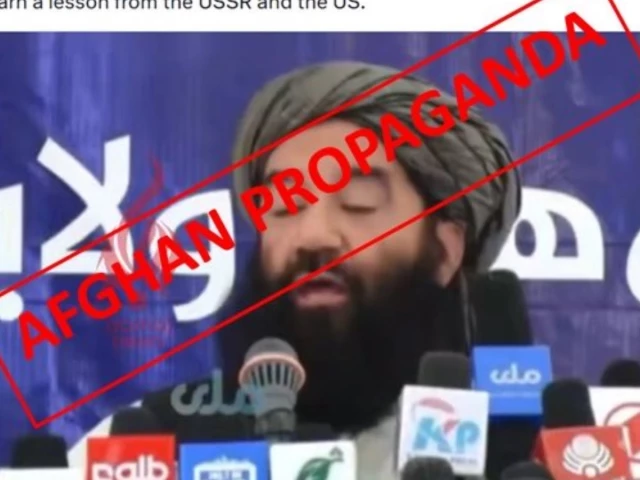
The statement came after Taliban Borders, Tribes and Tribal Affairs Minister Noorullah Noori warned Pakistan, saying Islamabad should learn from Afghanistan’s history and that Taliban opponents would be “defeated” if they chose war.
Speaking on Wednesday at a meeting with Kuchi elders from six provinces, Noori said those seeking to destabilise Afghanistan would face “serious consequences”.
Referring to the tensions, Noori said: “Pakistan’s army and intelligence services should understand the people of Afghanistan from a historical, ideological, political and practical perspective.”
Taliban opponents, including the Afghanistan Freedom Front, National Resistance Front and United Front of Afghanistan, have stepped up attacks against the Taliban in recent months.
Criticising the group’s political and military opponents, including the National Resistance Front, the minister said Taliban opponents had stood alongside what he called “occupiers” during the presence of US and Nato forces in Afghanistan but now spoke of fighting for freedom.
This is not the first time the Afghan Taliban regime has levelled allegations against Pakistan. In the past, it has accused Pakistan of facilitating infiltration, carrying out airstrikes and smuggling weapons into Afghanistan, allegations that Islamabad has repeatedly rejected.
According to security officials, the Afghan Taliban regime has been providing sanctuary, support and patronage to terrorist groups. They said documented evidence contradicted Kabul’s repeated denials and pointed to an entrenched terrorist network operating from Afghan soil.
Also Read: ‘Frivolous and baseless’: Pakistan rejects Taliban claims of involvement in Nuristan violence
Pakistan maintains that the terrorist nexus extended beyond the movement of terrorists across the border to their training, arming and operational support.
Security officials estimate that up to 70 per cent of the Fitna al-Khawarij terrorists infiltrating Pakistan were of Afghan origin. They further claim that the Taliban regime had allowed leftover US and NATO weapons to reach terrorist groups, including Fitna al-Khawarij and Fitna al-Hindustan.
In 2026 alone, terrorism emanating from Afghan soil claimed the lives of 1,327 Pakistanis and injured another 2,484, according to figures cited by Pakistani authorities.
The United Nations estimated the strength of TTP in Afghanistan at around 6,000 to 6,500 terrorists. UN reporting had also documented more than 600 terrorist attacks against Pakistan during 2025, including attacks launched from Afghan territory.
According to Pakistani security officials, the TTP had established training facilities in Afghanistan’s Kunar, Nangarhar, Khost and Paktika provinces.
The government has maintained that the issue was fundamentally one of Pakistan’s national security and that continued attacks from Afghan soil cannot be addressed through denials alone.
Pakistan says it expected the Taliban regime to fulfil its commitments by taking verifiable action against terrorist groups operating from its territory rather than defending or denying their presence.