


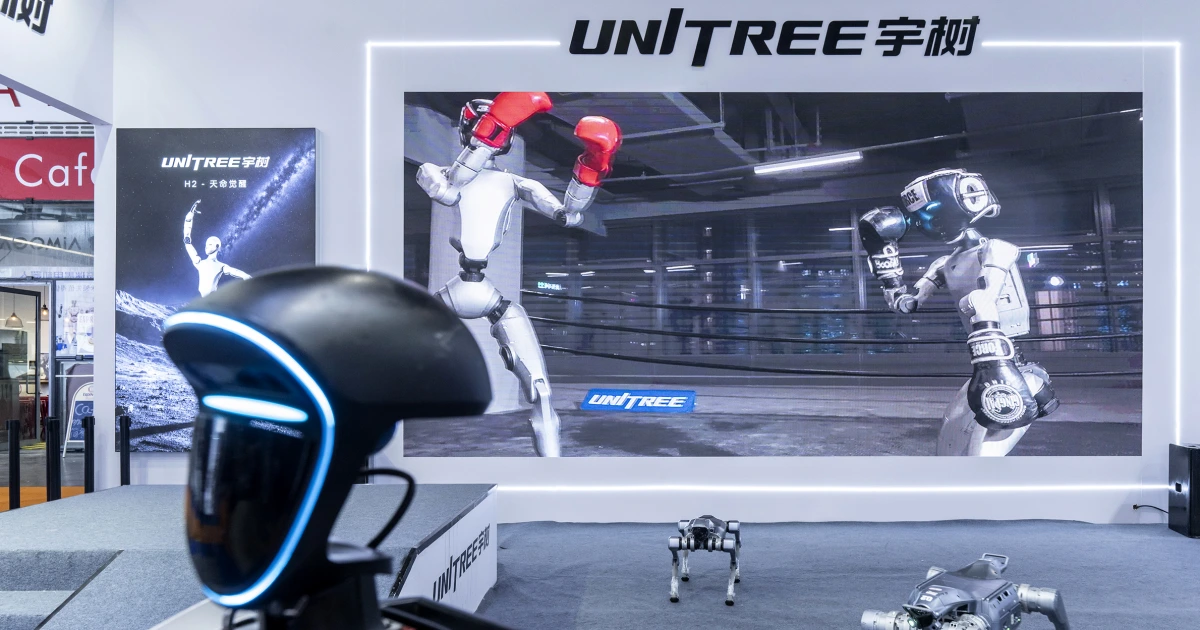
HONG KONG — The robotics firm behind China’s famously backflipping humanoids leapt to a remarkable stock market debut on Wednesday, with Unitree’s shares closing up 460% as investors rally behind homegrown beneficiaries of the A.I. boom.
Chinese humanoid and other robots have advanced at a breathtaking pace as Beijing competes for global tech dominance with Washington, which banned imports of new foreign-made robots last month over national security concerns. Unitree, the first humanoid robotics maker to go public on a mainland Chinese exchange, has won global attention with its humanoid and quadruped robots that can run, dance, and do backflips and kung fu.
On Monday, the Hangzhou-based company unveiled its new “Superman” robot, which it says can jump more than 6.5 feet high and has a top speed of more than 28 miles per hour — faster than men’s 100-meter world record holder Usain Bolt.
Unitree’s stock, which was initially priced at 150.8 yuan ($22) a share, closed Wednesday at 845 yuan ($125.40) on Shanghai’s tech-focused STAR Market, valuing the company at about $50 billion. Earlier, it went as high as 1,100 yuan ($163.23), or 629%.
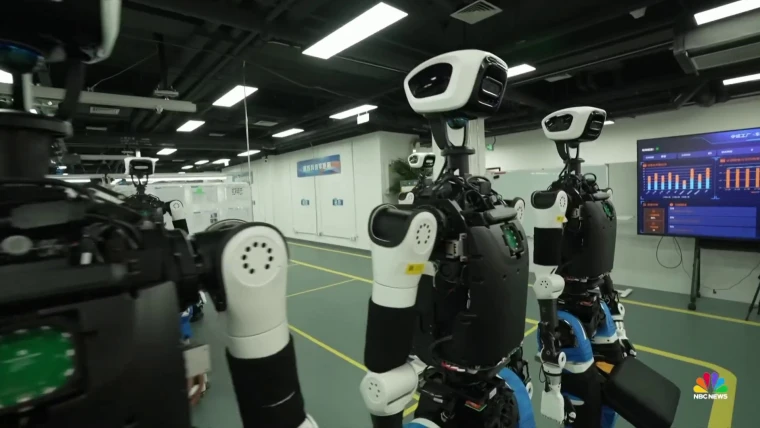
The debut leaves Unitree CEO Wang Xingxing, who owns about a fifth of the company he founded in 2016, with wealth on paper of more than $12 billion, according to Reuters.
Though Unitree is profitable, unlike most of its competitors, its products are mainly being sold to universities and research institutions rather than being used commercially.
And it is being cut off from the U.S. market under the ban, though existing models can continue to be sold.

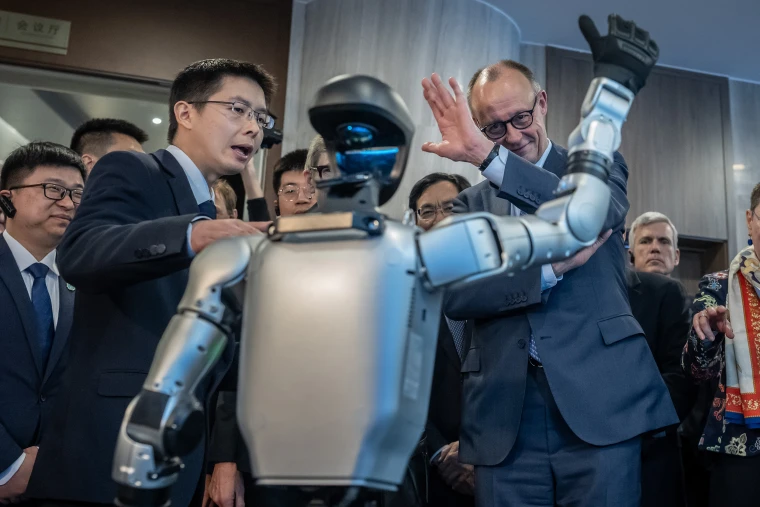
In June, the U.S. Defense Department also added Unitree to a list of Chinese military companies, describing it as a “contributor to the Chinese defense industrial base.” Though the designation does not involve sanctions on Unitree, which says its robots are for civilian use only, it prohibits the U.S. military from contracting directly with it.
The trading debut came as hundreds of Chinese companies showed off new products at the World Robot Conference in Beijing that started Wednesday. China is betting big on A.I. and robotics to help turbocharge its economy’s growth, which slowed to its weakest in over three years last quarter.
Beijing has put the advanced robotics industry front and center of its national agenda, with its latest five-year plan vowing to “target the frontiers of science and technology.” Unitree and AgiBot, another Chinese company, together accounted for more than 70% of the approximately 13,000 humanoid robots shipped globally last year, according to the Singapore-based market research firm Omdia.
Unitree’s debut follows another blockbuster listing in Shanghai by Chinese memory chipmaker CXMT, which surpassed tech giant Tencent to become the most valuable company listed on a mainland Chinese exchange after its shares surged 466% on their first day of trading last month.
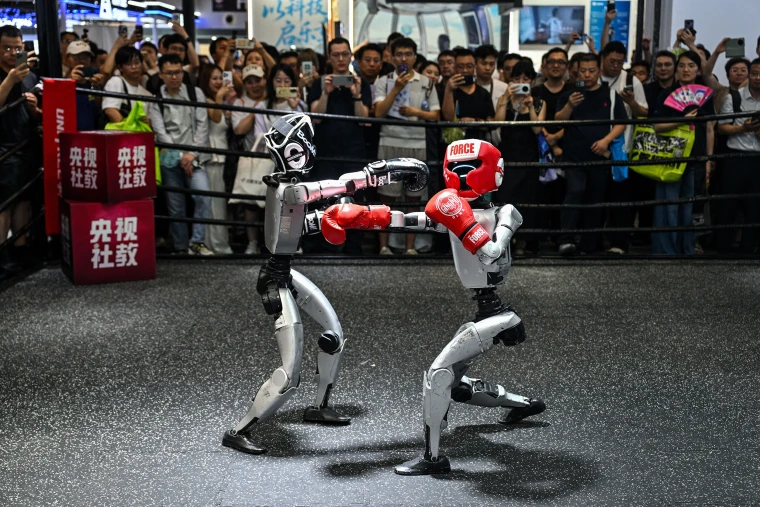
Investors championing Unitree and CXMT are riding on the wave of China’s growing prowess across the entire A.I. pipeline — from memory, which is crucial in data centers, to models to robotics.
“Chinese retail buyers tend to be more driven by hype,” said Lian Jye Su, a chief analyst at Omdia. “But the most important thing about the IPO is the fact that this is going to be the bellwether for the humanoid robotics industry.”
Unitree’s performance going forward will be closely monitored as several other Chinese robotics companies prepare to go public.
“The industry is still in a very nascent stage,” Lian said. “The first thing I’m seeking an answer for is sort of how real is the demand?”