


US president’s use of 1977 act to impose tariffs was struck down by Supreme Court in February
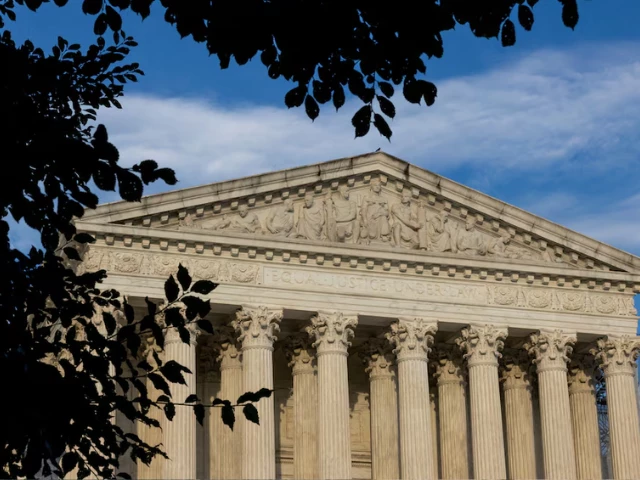
A view of the US Supreme Court in Washington, US June 29, 2024. Photo: Reuters
The United States government has begun the unprecedented task of refunding more than $166 billion in tariffs after a landmark ruling by the United States Supreme Court struck down a central pillar of President Donald Trump’s trade policy, triggering a scramble among importers to reclaim billions in duties.
According to The New York Times, the refund process, launched this week by US Customs and Border Protection, allows companies to apply for repayments on tariffs collected under emergency powers that the court ruled had been improperly used.
The move marks one of the largest government reimbursements to businesses in modern US history, with officials estimating that over 330,000 importers made payments on tens of millions of shipments.
Read: US will give sanctions, tariff relief to Iran: Trump
Within hours of the system going live, demand surged as companies rushed to file claims, The Hill reported. Even before the official rollout, over 3,000 businesses, including major corporations such as FedEx and Costco, had initiated legal action to secure refunds, underscoring both the scale of the financial stakes and the uncertainty surrounding the process.
At the heart of the dispute is Trump’s use of the International Emergency Economic Powers Act (IEEPA), a 1977 law never previously deployed to impose sweeping tariffs. The Supreme Court’s February decision invalidated those measures, concluding that the administration had exceeded its authority.
The ruling effectively dismantled a key instrument of Trump’s aggressive trade strategy, which had targeted a wide range of imports and countries.
For businesses, the tariffs had functioned as a significant cost burden. Importers were forced to either absorb the additional expenses, pass them on to consumers, or cut costs elsewhere. The refund programme now offers relief — but not equally.
Only the official importers who paid the tariffs are eligible to receive reimbursements, excluding millions of consumers who ultimately bore higher prices. Economists say that whether households see any benefit depends on companies voluntarily passing on the gains, something few have committed to.
Some large firms have indicated they may share the refunds. FedEx, which often acts as the importer of record while billing customers for duties, has said it intends to return funds where applicable. Costco, meanwhile, has suggested it could pass benefits on through lower prices, though it is already facing legal pressure from consumers seeking direct payouts.
For small businesses, however, the situation is far more uncertain, according to Fortune.
Many smaller importers lack the legal resources and administrative capacity to quickly navigate what is widely described as a complex and opaque refund system. Industry groups warn that the process, which requires extensive documentation and may take months to complete, risks favouring larger corporations with dedicated compliance teams.
“There’s a real concern that smaller players will be crowded out or delayed,” said one trade analyst familiar with the process. “Big firms have already lawyered up and filed early claims. Smaller businesses are still trying to figure out how the system works,” they added.
Read More: Trump says he will raise US global tariff rate from 10% to 15%
The technical challenges are substantial. US authorities had to build a new digital platform capable of processing claims in bulk while distinguishing between legal and illegal tariffs, often applied to the same shipments. Officials previously indicated that the system currently covers only about two-thirds of affected import entries, with plans to expand it in phases.
Processing times are expected to range from 60 to 90 days after claims are accepted, though experts caution that delays and technical glitches are likely, given the scale of the operation. The government is also liable for interest payments, adding roughly $650 million per month to the total refund bill.
For small business owners already strained by a year of fluctuating trade policies, the uncertainty is frustrating.
Many had joined coalitions opposing the tariffs, arguing that the duties disrupted supply chains and forced painful cost-cutting decisions, including layoffs and reduced investment. Even if refunds arrive, they say, the damage cannot easily be undone.
“There’s a sense that even if the money comes back, it’s too late to reverse what’s already happened,” said a representative of a small-business advocacy group involved in litigation against the tariffs.
The policy reversal also raises broader economic questions. Analysts say that companies may hesitate to spend their refunds amid continued uncertainty over US trade policy.
The Trump administration has already initiated new investigations under separate legal authorities that could lead to fresh tariffs, potentially offsetting any financial relief.
This lingering unpredictability is likely to dampen the broader economic impact of the refunds. Rather than investing or expanding, many firms are expected to hold onto the cash as a buffer against future policy shifts.
Also Read: US Supreme Court strikes down Trump’s sweeping tariffs
Meanwhile, the legal battle may not be over. The administration has not ruled out further court action to limit or delay refunds, even as lower courts have ordered repayments to proceed.
The episode highlights the risks of using emergency powers for sweeping economic measures and underscores the far-reaching consequences of abrupt policy shifts.
While large corporations move swiftly to reclaim billions, smaller businesses — often the most vulnerable to sudden cost increases — fear they may once again be left at a disadvantage.
As the refund process unfolds, it is becoming clear that the court’s decision, while decisive, does not automatically level the playing field. Instead, it has opened a new phase of competition — one in which access to resources, legal expertise and administrative capacity may determine who ultimately benefits from the return of billions in tariffs.