


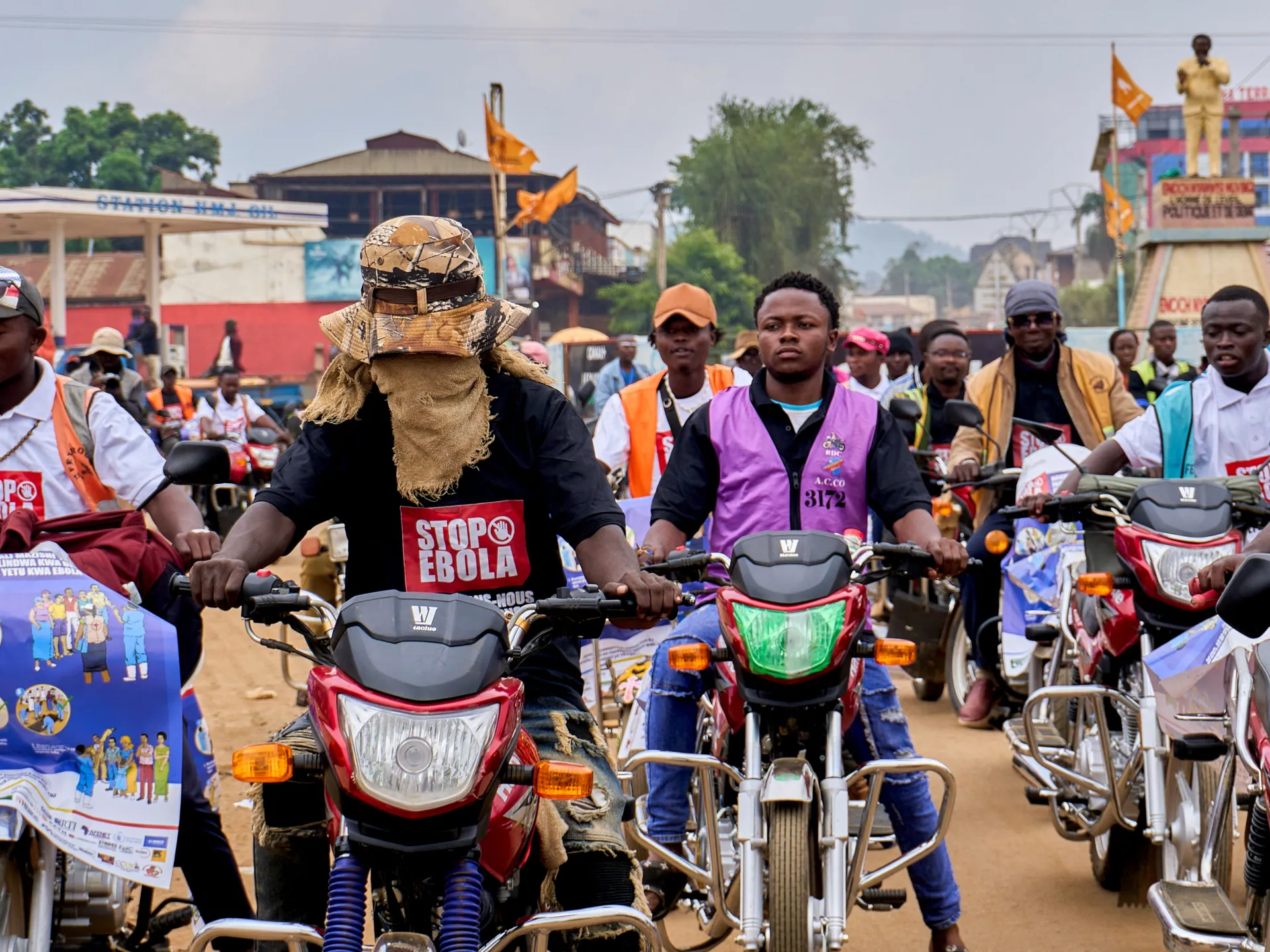
The Bundibugyo epidemic, the world’s second-largest, has been described as the fastest-spreading on record.
Published On 7 Aug 2026
The number of confirmed Ebola cases in the Democratic Republic of the Congo (DRC) has surpassed 4,000, according to government data, as the world’s second-largest outbreak shows no sign of slowing.
As health authorities remain on alert, World Health Organization (WHO) vaccine experts on Friday recommended a full-scale human trial of the only existing approved Ebola vaccine to see if it could offer cross-protection against the deadly Bundibugyo strain spreading in DRC, a strain for which there is no vaccine.
Recommended Stories
list of 3 itemsend of list
DRC reported 4,053 Bundibugyo cases, including 1,850 deaths, since the outbreak was declared in mid-May, the latest Ministry of Health situation report showed.
The outbreak has hit 53 health zones across five provinces: Ituri, North Kivu, South Kivu, Haut-Uele, and Tshopo. Eighty-seven percent of cases are in Ituri province, the epicentre of the current outbreak, with 11 percent in neighbouring North Kivu.
The epidemic has been described as the fastest-spreading on record, and experts believe the true number of cases may be much higher than the official tally.
So far only West Africa’s 2014-2016 outbreak has been bigger, with more than 28,000 cases recorded across Guinea, Liberia and Sierra Leone.
The disease response has also faced challenges including the country’s military conflict, delayed detection and a lack of readily available treatments and vaccines, as Ebola spreads through contact with bodily fluids.
Ervebo vaccine trial recommended
On Friday, the WHO recommended the commencement of full-scale human trials for the Ervebo vaccine, the only licensed Ebola vaccine.
Ervebo has proven to be safe and efficacious against the more common Zaire strain of the Ebola virus, and WHO experts said early data, notably from animal trials, showed it may also give some protection against the rare Bundibugyo strain.
Across several studies, the experts found that three out of four non-human primates vaccinated with Ervebo survived the Bundibugyo strain, compared with one out of four control animals. An unpublished study on ferrets the experts looked at also found that the research-grade version of Ervebo provided 100 percent protection against Bundibugyo, whereas all control animals died within 10 days.
“The members recommended Ervebo, the only licensed Ebola vaccine, be prioritised for inclusion in a randomised clinical trial in the context of the ongoing outbreak,” a WHO statement said.
Still, a specific Bundibugyo vaccine is the preferred option for fighting the current outbreak, according to TAG-CVP, the United Nations’ health agency’s Technical Advisory Group on Candidate Vaccine Prioritization. As such, the group cautions against any immediate action or trials without the necessary findings to move forward.
“Expectations need to be managed about its likely protective effect if used in a Phase III ring vaccination trial, as efficacy against symptomatic disease and transmission may not be high, whereas protection against a fatal outcome may be achieved,” their report said.
Two potential Bundibugyo vaccines are in the early stages of clinical trials on humans, while a third is being worked on to bring it to that stage.
The Gavi global vaccine alliance maintains a stockpile of 500,000 Ervebo doses. It said doses from the stockpile were to be made available for the trials, with some already in the DRC.
“This is already the largest Ebola outbreak in DRC’s history, and could well become the largest outbreak ever,” said Gavi chief executive Sania Nishtar. “Given the terrible toll on communities and frontline workers, we are encouraged that the approved Ebola vaccine Ervebo … could help reduce severe illness and deaths.”