


Russian media identified victim as Darya Shipilova, 28, a laboratory worker at Irkutsk research centre
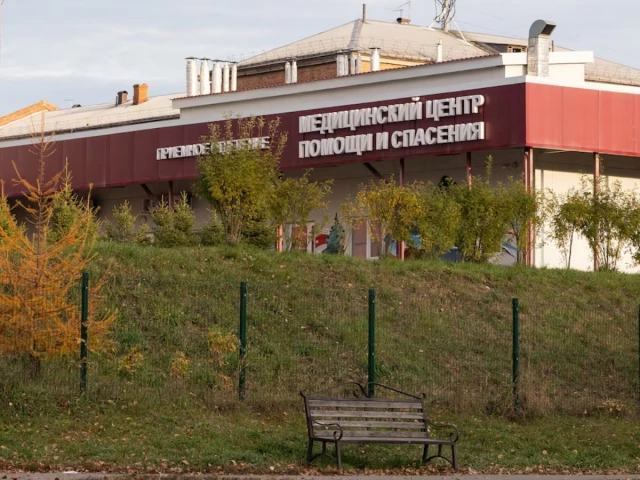
A view of the Medical Assistance and Rescue Centre, an infectious diseases hospital, in the town of Shelekhov in the Irkutsk region, Russia, October 5, 2026. REUTERS
Local authorities in Russia’s Siberian region of Irkutsk have imposed quarantine measures on people and several hospital departments amid reports of a possible “plague” outbreak.
Russia’s consumer and health watchdog, Rospotrebnadzor, said an employee of the Irkutsk Anti-Plague Research Institute of Siberia and the Far East was diagnosed with “pneumonia of unknown etiology.”
The employee died from her illness, according to numerous media reports and official statements, while authorities placed those who had contact with her under medical observation.
Read: Russia says plague institute worker’s death does not risk an epidemic
Rospotrebnadzor later said the sanitary and epidemiological situation in the Irkutsk region was “calm.”
The developments, however, have raised concerns and public health fears on social media.
Here is what is known about the reported outbreak:
Reported outbreak
On Friday, Irkutsk Governor Igor Kobzev said that he convened an extraordinary meeting of the regional sanitary and anti-epidemic commission following reports of a suspected “highly dangerous infectious disease” in a resident.
Kobzev said Rospotrebnadzor organized and was implementing a comprehensive set of anti-epidemic measures, adding that the watchdog and regional government were closely monitoring the situation.
“I would like to inform you that all identified contacts have been placed under medical observation. As of today, none of the contacts show any signs of illness, and laboratory test results have come back negative,” Kobzev said.
Maxim Modin, mayor of Irkutsk’s Shelekhovsky district, said the same day that several departments of the district hospital in Shelekhov suspended patient discharges and admissions.
Alexey Tsydenov, head of the neighboring Russian Republic of Buryatia, said the woman who died in Irkutsk “possibly from the plague” had not visited his region.
Tsydenov said there were no “plague” outbreaks in Buryatia, including in areas bordering Mongolia.
Two days later, Rospotrebnadzor said no emergencies had been reported while working with pathogenic microorganisms at the Irkutsk Anti-Plague Institute.
It said the sanitary and epidemiological situation in the Irkutsk region and the cities of Irkutsk and Shelekhov was “stable.”
The watchdog added that no cases of infectious disease had been reported among employees of the institute over the previous 10 days.
Rospotrebnadzor said Monday that the sanitary and epidemiological situation in Irkutsk was “calm.”
Media attention intensified after local outlet People of Baikal on Friday reported that the institute employee, identified as 28-year-old Darya Shipilova, allegedly broke a test tube containing “pneumonic plague.”
The outlet reported that she became ill after allegedly breaking the test tube late last month and was hospitalized in Shelekhov, where she died Friday evening.
High-level reactions
Several high-level officials have commented on the situation, urging people to rely on official assessments from relevant authorities.
“Rospotrebnadzor is the lead agency with competence in this area,” Kremlin spokesman Dmitry Peskov told a news conference in Moscow on Monday.
“It is precisely Rospotrebnadzor’s official statements that should be heeded, rather than listening to various rumors or speculations,” Peskov said.
He added that the watchdog employs top-tier professionals in the field and again urged people to “heed their official statements.”
US President Donald Trump said Monday that Washington was closely monitoring the reported case of “pneumonic plague” in Russia and pledged assistance.
“Years ago you could treat pneumonia easier, and the microbes and the germs have gotten stronger,” Trump told reporters at the White House before departing for a campaign rally in Nebraska.
“But we’ll help them. We’ll help them,” he added.
Responding to Trump’s comments, Peskov said it is “always good when mutual assistance is offered.”
The US Centers for Disease Control and Prevention said Tuesday that it was closely monitoring reports of a “suspected case of pneumonic plague” in Russia that resulted in one death.
US Secretary of State Marco Rubio urged Russia the same day to provide full transparency and share detailed information about the incident with the international community.
The World Health Organization told Russian state news agency Tass that it was maintaining contact with local health authorities over the incident.
The WHO said that, based on “available unofficial information,” it assessed the public health risk in the region as low.
What is plague?
While the exact cause of the reported illness remains unclear, official statements have raised questions about plague.
Plague is an infectious illness caused by the Yersinia pestis bacterium, which spreads through small wild mammals and their fleas, according to the WHO.
The WHO said bubonic plague is the most common form, while pneumonic and septicemic forms are invariably fatal unless treated early.
According to the WHO, pneumonic plague is the most virulent form, with an incubation period potentially as short as 24 hours.
Plague was historically responsible for the “Black Death,” a pandemic in Europe in the 14th century that resulted in more than 50 million deaths, according to the WHO.