

The Trump administration will allow an Iranian delegation to attend the United Nations General Assembly next week, albeit with some restrictions, a State Department spokesperson said Thursday.
The decision to grant Iranian top officials visas to travel to New York City for the annual meeting of global leaders comes seven months into the U.S. war with Iran.
“Consistent with our host country obligations, the core delegation from the Iranian regime will be able to attend U.N. General Assembly High Level Week,” the spokesperson said in a statement. “The delegation will be under travel restrictions and will face prohibitions on the purchase of luxury and other goods per our policy.”
The Iranian delegation’s trip comes at a sensitive time, as the U.S. military and the Islamic Revolutionary Guard Corps have continued attacks in the Strait of Hormuz, a vital waterway through which some 20% of the world’s oil flowed before the war.
President Donald Trump said Thursday that he is considering resuming full-scale attacks against Iran.
“I have a big decision coming up. Do I want to go in and annihilate them [the Iranian regime] or do I not? It’s a big decision. Anything could happen with me,” Trump told Axios.
Last week, the U.S. military struck five Iranian tankers linked to the IRGC in response to attempted attacks on an American warship, according to U.S. Central Command.
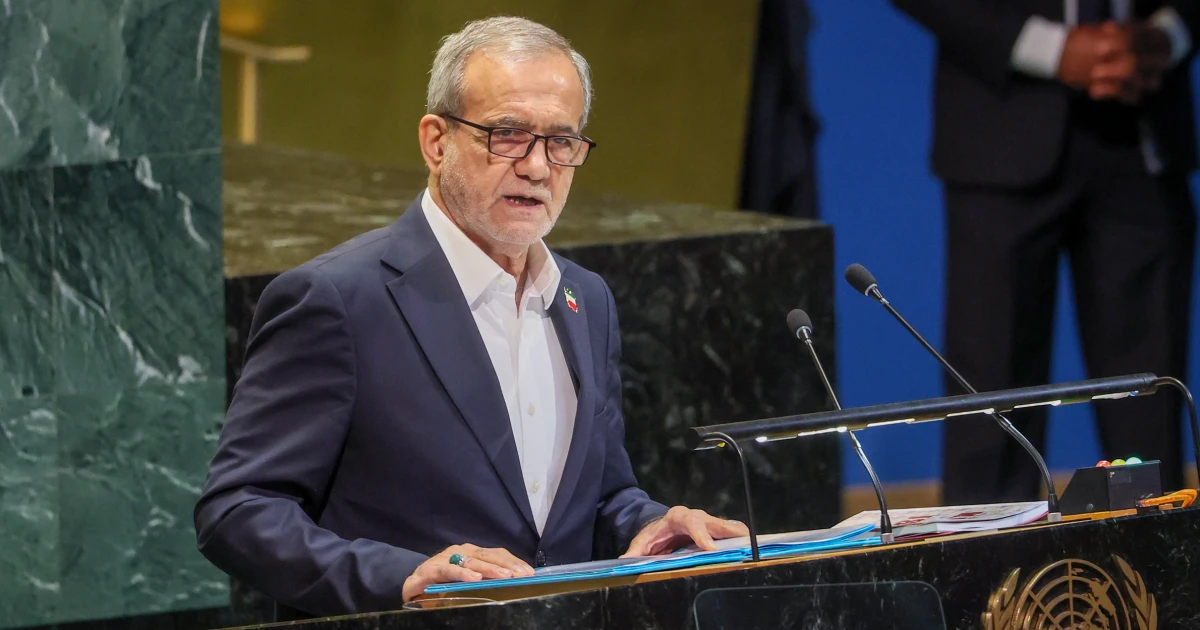
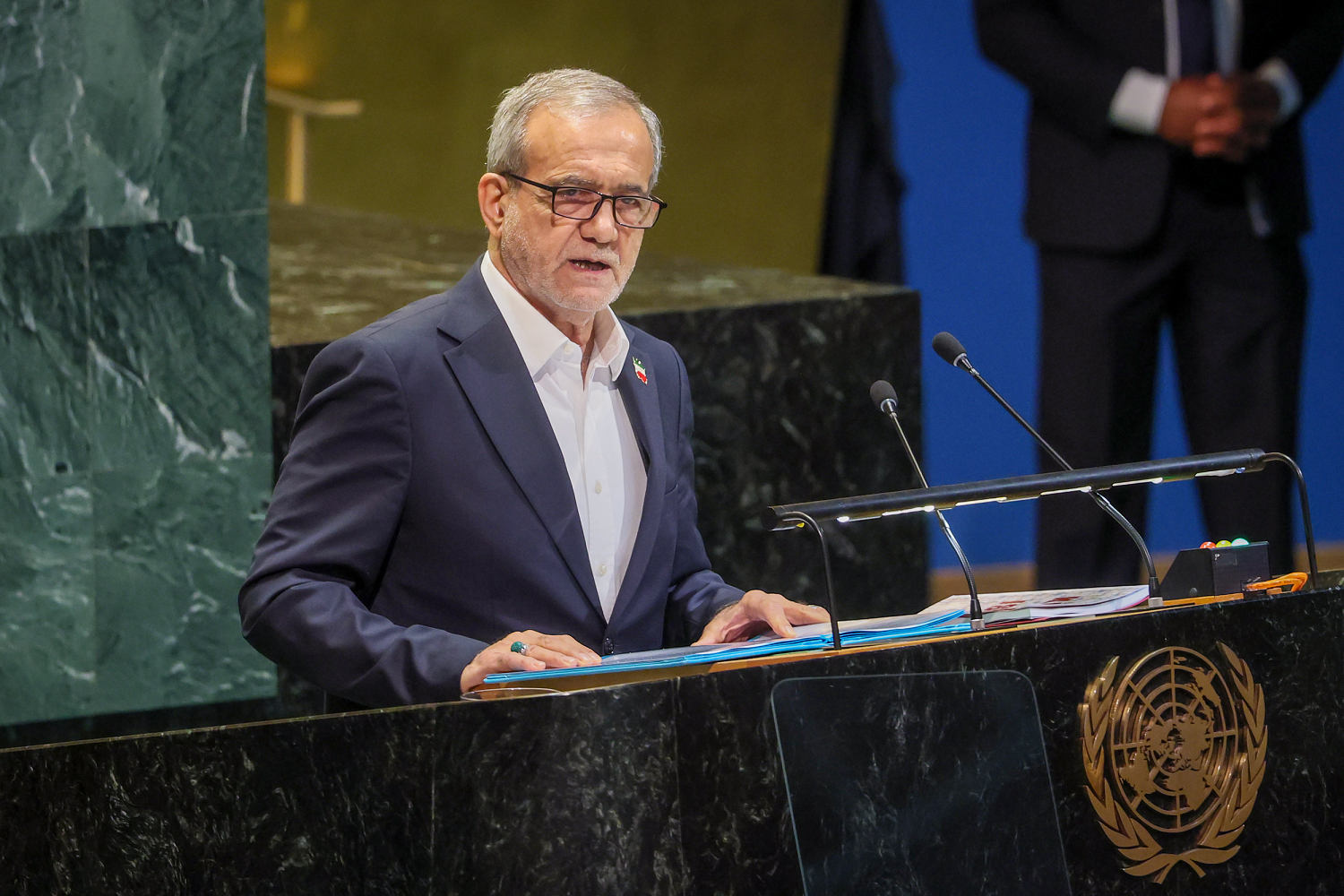
The Iranian delegation cleared by the U.S. will be smaller than the one the country sent last year, the State Department said. Iranian President Masoud Pezeshkian and Iranian Foreign Minister Abbas Araghchi will be a part of the delegation receiving U.S. visas, a U.S. source familiar with the decision said.
The U.S. has historically restricted the Iranian delegation’s travel during its visits to New York, but beginning in 2025 the Trump administration began blocking the officials’ access even to wholesale and luxury stores, confining their movements to “areas strictly necessary to transit to and from the U.N. headquarters district to conduct their official U.N. business,” according to the State Department.
“We will not let the Iranian regime’s elites exploit UNGA for a luxury retail splurge paid for by the Iranian people’s suffering, all while the regime funnels Iran’s wealth to support its terrorist proxies,” State Department spokesperson Tommy Pigott said Thursday in a social media post. “The U.S. will continue to ban Iranian UN Mission officials, visiting officials, and their dependents from buying wholesale club memberships or luxury goods here.”
Last month, an Iranian presidential protocol official said Tehran was still assessing the level and size of its attendance at UNGA this year, calling the conditions imposed by the U.S. illegal, without elaborating on the complaint.
The general debate of the General Assembly, the portion of the meeting where world leaders will give speeches, will begin on Tuesday when Trump is expected to speak. Pezeshkian is scheduled to address the UNGA on Wednesday.
Despite granting visas to the Iranian delegation, the Trump administration will once again block Palestinian Authority President Mahmoud Abbas from attending the UNGA, according to a source familiar with the decision.
That decision is an extension of sanctions that deny the necessary visas to officials from the Palestinian Authority and the Palestine Liberation Organization to attend the annual meeting of global leaders, according to the source.
In a statement Wednesday, the State Department accused both organizations of trying to bypass negotiations by seeking unilateral recognition of a Palestinian state, taking actions to internationalize the Israeli-Palestinian conflict — including through the International Criminal Court and the International Court of Justice — and “glorifying acts of terrorism and terrorists in public pronouncements and school textbooks.”
The Palestinian Authority’s Ministry of Foreign Affairs and Expatriates rejected the U.S. decision and said in a statement that “the unjustified measure” runs counter to efforts aimed at restoring trust and “creating the political climate necessary to implement the two-state solution and achieve peace and stability in the region.”