


DUBAI: Iran and Oman are still working on the details of an agreement on the Strait of Hormuz, a senior Iranian source said on Wednesday, after Iran’s Revolutionary Guards said the two countries had agreed how to share the waterway and its revenues.
The elite force’s spokesperson, echoing Tehran’s official stance, also said the strait would not open unless the U.S. met Tehran’s conditions under an interim ceasefire agreement that was struck in June before unravelling. Those conditions include an end to the U.S. blockade on Iranian ports, compensation and removal of sanctions.
Iran and Oman have held on-and-off talks for weeks about controlling traffic through the strait, which handled one-fifth of global oil and liquefied natural gas shipments before the war began in February.
Most shipping has since been shut down, driving global energy prices higher, as Tehran and Washington have tried to assert control over the channel, imposing separate blockades.
IRANIAN SOURCE SAYS NO FINAL AGREEMENT REACHED ON STRAIT
“An agreement with Oman over the Strait of Hormuz has not been finalised,” the senior Iranian source told Reuters, adding that the talks were continuing on the details of an accord.
A spokesperson for Iran’s Islamic Revolutionary Guard Corps (IRGC) said Iran and Oman had reached an agreement on their shares of the territory and revenues.
“The Strait of Hormuz belongs to Iran and the country of Oman… We have been in negotiations with Oman for about a month, and we have reached results that are acceptable to both sides,” Hossein Mohebbi said in comments published by Iranian state media.
“In these negotiations, agreements have been reached regarding the share of each country in the waters of the Strait and the share of Iran and Oman in its revenues,” he added.
It was not immediately clear at what stage of the negotiations the agreements had been reached. Iran had said earlier this month that a deal on the strait was close.
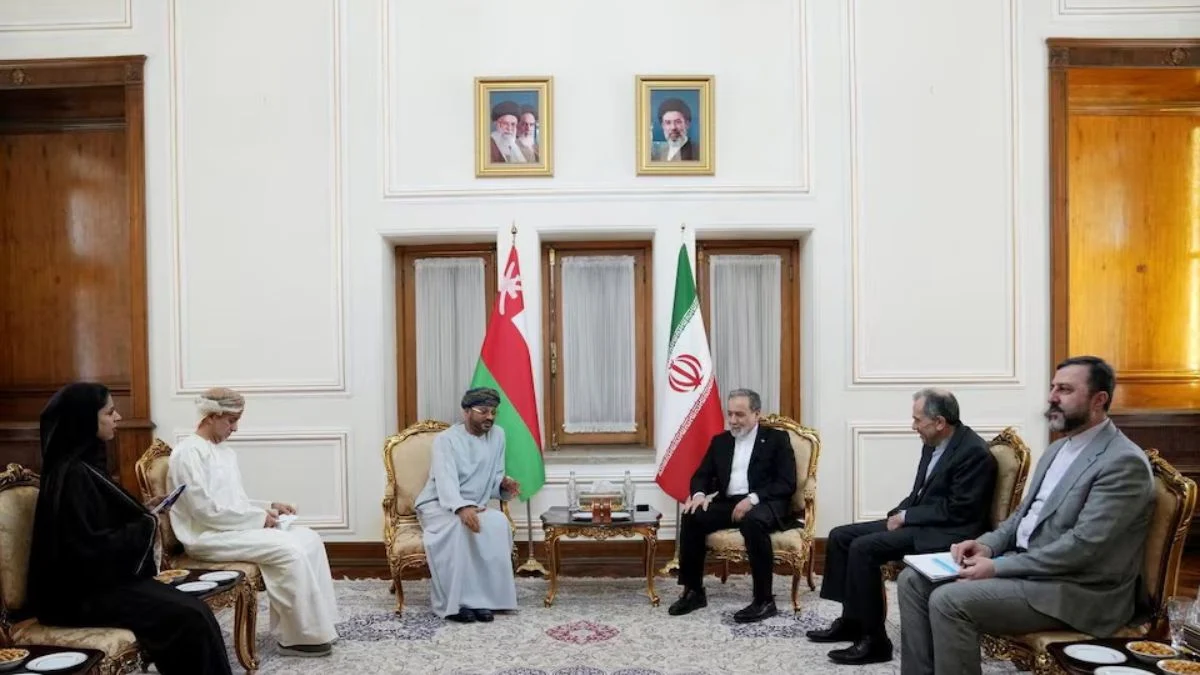
Following talks on Tuesday between Iran and Oman, Omani Foreign Minister Badr Albusaidi said he was “hopeful we will soon announce a temporary corridor for the Strait of Hormuz and practical arrangements to restore safe navigation”.
U.S. President Donald Trump has warned Oman against cooperating with Iran, telling Fox News on August 17: “If Oman gets in the way, we’ll bomb the shit out of them.”
The IRGC accused the United States of seeking to obstruct Iran’s negotiations with Oman and said this had caused an agreement to be delayed.
“If the United States stops obstructing and returns to the agreement, we can open the Strait of Hormuz within the framework of the agreement reached … If the United States does not accept our conditions, the Strait of Hormuz will not be opened under any circumstances,” Mohebbi said.
ATTACKS ON SHIPPING
Though active hostilities between the U.S. and Iran have largely subsided in recent weeks, diplomatic efforts to reach a peace deal have stalled, and continuing attacks on ships mean passage through the Strait of Hormuz remains perilous.
Iran announced a blacklist on Sunday of 45 ships in an apparent effort to stop ship-to-ship transfers used by Gulf energy producers to evade the Iranian blockade. Some companies plan to stop using vessels added to the blacklist, sources said.
In an effort to tighten pressure on Iran’s economy, the United States has threatened to punish countries that continue to do business with Iran, but said it would not impose penalties immediately.
Iran has denounced the U.S. effort to isolate its economy as an act of “gross lawlessness”, expressing confidence that many countries would not join the pressure campaign.
In a letter to the United Nations published on Thursday, Iranian Foreign Minister Abbas Araqchi again denounced the new U.S. sanctions, saying they imposed collective punishment by denying Iranians access to food, medicine and other necessities.
“Either we defend the principles of sovereign equality, non-interference, and respect for the sovereign rights of States, or we surrender to the unilateralism and bullying of a rogue state,” Araqchi wrote.
Oil prices fell for a third day, dropping more than 1.5%, following signs of renewed efforts to seek a mediated end to the war that began on February 28 with U.S. and Israeli strikes on Iran.
U.S. REPORTEDLY NOT PLANNING NEW STRIKES FOR NOW
Secretary of State Marco Rubio told allies that the U.S. did not expect to launch new strikes against Iran for now, and would instead focus on other means of pressure, Axios reported on Tuesday.
U.S. public approval of the war has fallen to its lowest level since the conflict’s early days, and Trump’s popularity is likewise at a record low ahead of congressional elections in November, according to Reuters/Ipsos polling.
Thousands of people have died in the conflict, most of them in Iran and Lebanon, while the U.S. and Israel have degraded much of Iran’s conventional military capacity. The exact state of its nuclear program, which the U.S. and Israel aim to dismantle, remains unknown.