


MULTAN:
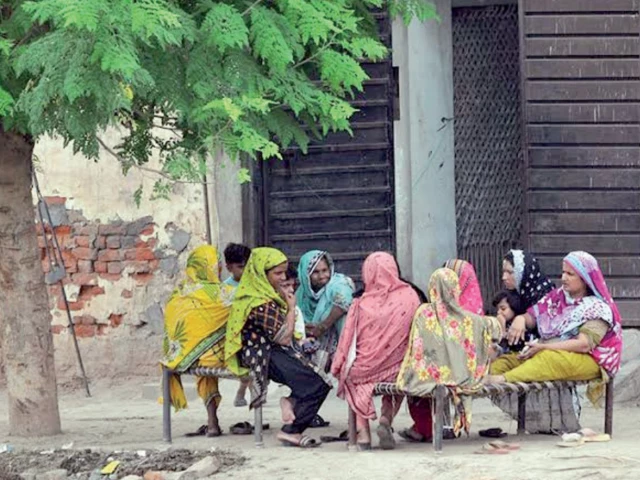
On a sweltering summer afternoon in Chah Inaamwala, a small village near Multan, 68-year-old Baba Shafi pulls his woven charpai beneath the shade of a large mango tree outside his home, seeking relief from the relentless heat.
Unable to afford an air conditioner because of high electricity bills and a limited income, Baba Shafi has followed the same routine for decades, moving his cot throughout the day to remain beneath the tree’s shade and wherever the breeze flows freely.
Soon, his wife and two young grandsons bring another charpai outside and settle beside him, spending the hottest hours of the afternoon beneath the tree. This ritual also extends to women-only gatherings.
For generations, rural families across South Punjab have relied on this simple practice to endure long, punishing summer months.
But as heatwaves across Pakistan become longer, more frequent and more intense, the traditional habit is gaining renewed attention as a practical and inexpensive way of coping with extreme weather, particularly for elderly villagers who face greater risks from heat-related illnesses.
South Punjab remains among the hottest regions of the country, with summer temperatures regularly reaching between 42°C and 48°C. During the peak heat months, homes without cooling systems can become unbearably hot, making the humble charpai an important refuge for many rural households.
Unlike modern beds and mattresses, the charpai is raised above the ground and constructed from woven material, allowing air to circulate underneath and around the body. That simple design can make resting on it considerably more comfortable during oppressive summer afternoons.
Its construction also reflects generations of adaptation to the region’s climate. Traditional charpais generally consist of a wooden frame fitted with woven natural fibres, often made from date-palm leaves that grow abundantly across southern districts of Punjab.
Allah Rakha, a traditional cot weaver from Pipli village in Vehari district, has spent more than 30 years making charpais. He says date-palm leaf weaving is light, durable and naturally breathable, allowing heat to escape instead of accumulating beneath the body.
A simple charpai made with date-palm leaves costs between Rs6,000 and Rs8,000, according to Allah Rakha. For low-income rural households, the relatively modest price makes it an accessible household item compared with modern cooling appliances.
Although synthetic ropes have become increasingly common, he says local buyers continue to favour charpais woven from natural fibres because they remain cooler during the hottest part of the day.
Villagers, however, point out that the charpai’s cooling effect is most effective when combined with the shade of trees. Across rural settlements, people position their cots beneath neem, keekar, shisham and mango trees, whose canopies block direct sunlight.
The raised cot keeps the body away from the heat radiating from sun-baked earth, while the tree canopy provides protection from direct solar exposure. Together, the shade, elevation and moving air create a relatively cool outdoor space where villagers can rest.
These shaded areas also serve purposes beyond escaping the heat. Beneath village trees, charpais become informal social spaces where neighbours gather to talk, discuss farm work and check on one another, particularly during the long afternoon hours.
For elderly residents, the practice is both a health necessity and an established social habit. Many older people remain at home while younger members of their families leave for agricultural work or other jobs, making shaded outdoor spaces important to their daily comfort.
The charpai also becomes indispensable during power outages, which remain a recurring problem in rural Pakistan during peak summer. When electricity fails, electric fans and air coolers stop immediately, often turning already hot indoor rooms into unbearable spaces.
Muhammad Hanif, a resident of Faiz-e-Aam locality, says families naturally move their charpais outside when power cuts occur. Sleeping beneath a tree or in an open courtyard allows them to catch whatever natural breeze is available.
The cot’s usefulness also lies in its mobility. A single charpai can serve as a seating area in the morning, a place to rest after lunch, a meeting spot for visitors in the evening and an outdoor bed at night.
It can easily be shifted from an open courtyard to a verandah, beneath a tree or onto a rooftop, depending on the time of day, availability of shade and direction of the wind.
Yet this traditional way of living is gradually disappearing. Older mud and brick houses with broad courtyards, open verandahs and mature shade trees are increasingly giving way to modern concrete structures.
Concrete buildings absorb heat during the day and release it back into living spaces at night. Malik Arham, who lives in a newly developed residential society, says many urban and semi-urban households no longer keep charpais, relying instead on conventional indoor furniture.
As climate change brings longer and harsher summers, however, traditional methods of managing heat are being reconsidered. The charpai beneath a tree cannot alter the region’s climate, but it offers vulnerable communities a low-cost means of adapting to rising temperatures.