


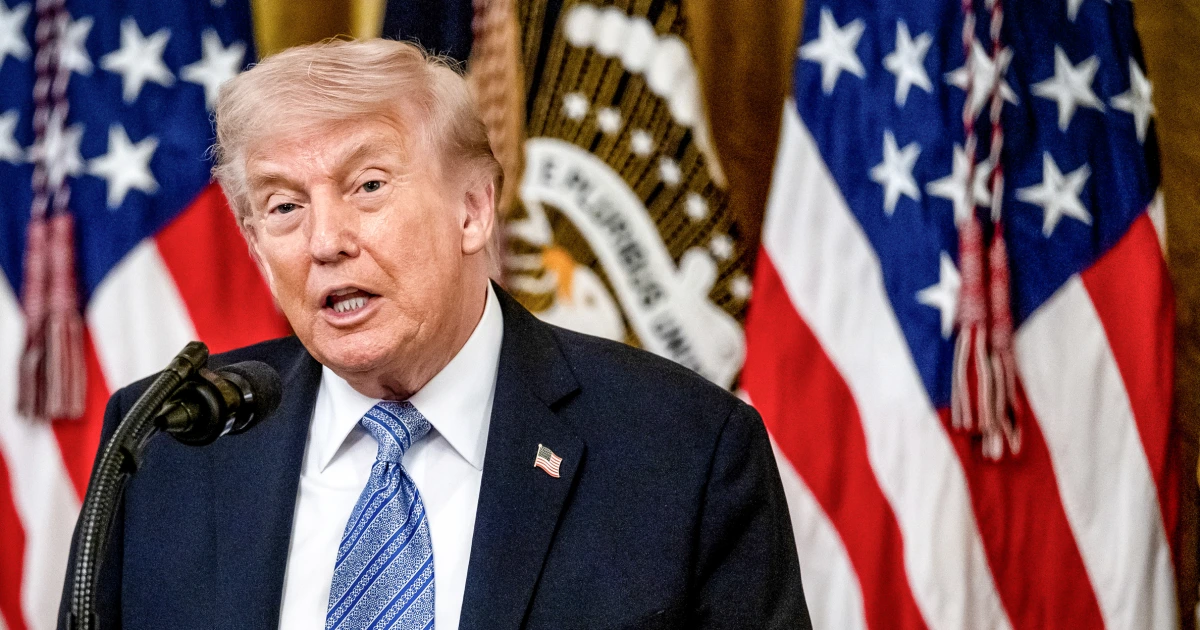
WASHINGTON — President Donald Trump’s abrupt reversal on his plan to help ships go through the Strait of Hormuz came after a key Gulf ally suspended the U.S. military’s ability to use its bases and airspace to carry out the operation, according to two U.S. officials.
Subscribe to read this story ad-free
Get unlimited access to ad-free articles and exclusive content.

Trump surprised Gulf allies by announcing “Project Freedom” on social media Sunday afternoon, the officials said, angering leadership in Saudi Arabia. In response, the Kingdom informed the U.S. it would not allow the U.S. military to fly aircraft from Prince Sultan Airbase southeast of Riyadh or fly through Saudi airspace to support the effort, the officials said.
A call between Trump and Saudi Crown Prince Mohammed bin Salman did not resolve the issue, the two U.S. officials said, forcing the president to pause Project Freedom in order to restore U.S. military access to the critical airspace.
Other close Gulf allies were also caught off guard; the president spoke with leaders in Qatar after the effort had already begun.
A Saudi source told NBC News that Trump and the crown prince “have been in touch regularly.” Saudi officials were also in touch with Trump, Vice President JD Vance, U.S. Central Command and Secretary of State Marco Rubio, the source added.
Asked whether the announcement of Project Freedom caught the Saudi leaders by surprise, the Saudi source said: “The problem with that premise is that things are happening quickly in real time.” The source said Saudi Arabia was “very supportive of the diplomatic efforts” by Pakistan to broker a deal between Iran and the U.S. to end the war.
A White House official said in a statement when asked about some Gulf state leaders being caught off guard by the announcement of the U.S. effort to help ships transit the Strait of Hormuz, “Regional allies were notified in advance.”
A Middle Eastern diplomat said the U.S. did not coordinate Project Freedom with the Omanis until after Trump made the announcement. “The U.S. made an announcement and then coordinated with us,” the diplomat said, adding “we were not upset or angry.”
Trump had announced the operation over the weekend as a way to break Iran’s blockade in the Strait of Hormuz, and his top national security leaders spent much of Tuesday talking up the effort in public briefings at the Pentagon and White House, only to have the president suddenly halt the operation roughly 36 hours after it began.
The U.S. military had been lining up a number of additional ships in the Gulf for transit through the strait when the operation was stopped, a U.S. official said. U.S. Central Command had earlier announced two U.S. flagged ships had made it through the strait as part of Project Freedom.
In his post, Trump said Project Freedom would be “paused for a short period of time to see whether or not” an agreement to resolve the war “can be finalized and signed.”
The U.S. military maintains fighter aircraft, refueling tankers, and air defenses at Prince Sultan Airbase in Saudi Arabia. The Saudis allowed the U.S. to fly aircraft from there to support the war in Iran, as well as allowing aircraft based in nearby countries to fly over.
“Because of geography, you need cooperation from regional partners to utilize their airspace along their borders,” one U.S. official said. In some cases there is no other way around, the official explained. Military aircraft were critical to protect ships during Project Freedom, essentially providing a defensive umbrella.
The U.S. military refers to permission to use another country’s territory as ABO, which stands for access, basing, and overflight. Fighter jets, refueling tankers, and support aircraft all need permission to fly from key regional allies. Saudi Arabia and Jordan are critical for allowing aircraft to base there, Kuwait is critical for overflight, and Oman for both overflight and naval logistics.
Trump called the emir of Qatar after Project Freedom began, and a Qatari official said in a statement that they discussed the ceasefire agreement and “implications for maritime security and global supply chains.” The statement said the emir emphasized the importance of de-escalation.
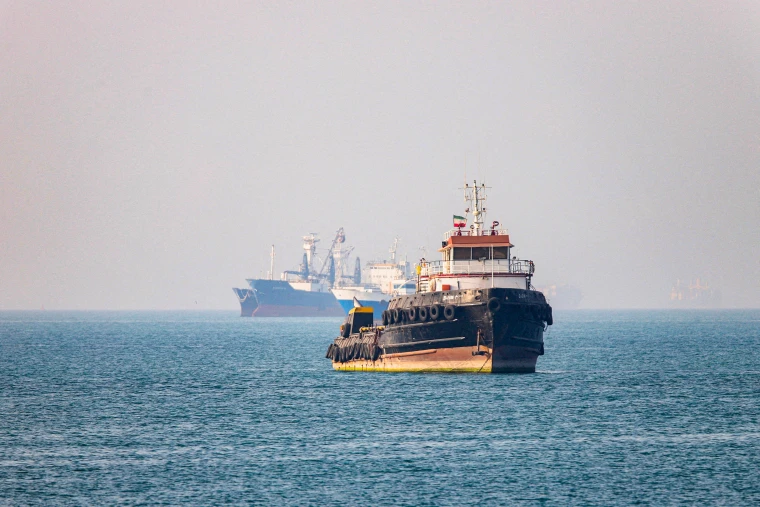
The U.S. military continues to maintain a presence in and around the Gulf. It has a bigger footprint in the region than it did on Feb. 28 when the war began. There are two carrier strike groups in the region, and the Pentagon has brought in additional logistics and support and re-supplied stockpiles.
Project Freedom briefly provided U.S. military surveillance, firepower and personnel on board ships so they could safely transit out of the Persian Gulf through the Strait of Hormuz as Iranian forces continued to threaten and attack ships in transit through the critical waterway. Pentagon officials said the operation was separate from the bombing campaign that began on Feb. 28 and was dubbed “Epic Fury.”
The Trump administration has attempted to push forward on a negotiated agreement to end the hostilities. Iran was reviewing another peace proposal with the U.S., Foreign Ministry spokesman Esmail Baghaei said in an interview with Iran’s semiofficial ISNA news agency. He said once the regime has assessed it, Iran will discuss it with Pakistan, which has been acting as a mediator. Axios first reported details of the proposal.
In a social media post early Wednesday, Trump didn’t detail the proposal, but said the war could end if “Iran agrees to give what has been agreed to.”
“They want to make a deal,” Trump said from the Oval Office Wednesday. He said there had been “very good talks over the last 24 hours.”
The political pressure is mounting on Trump ahead of the November midterm elections, when Republicans will be fighting to preserve their narrow margin in the House and majority in the Senate. In an interview with PBS on Wednesday, the president said it’s possible U.S. negotiators could strike a deal with Iran’s regime before he travels to Beijing next week for a meeting with his Chinese counterpart, Xi Jinping.
“I think it’s got a very good chance of ending, and if it doesn’t end, we have to go back to bombing the hell out of them,” Trump told PBS.
Several close Trump confidants have encouraged the president to “finish the job” in Iran by taking out the rest of the regime’s conventional military assets, even insisting that the offensive could be completed by the time of the critical China trip, according to multiple former U.S. officials.
China’s Foreign Minister Wang Yi met with Iranian leaders Wednesday and said it was critical the war ended as soon as possible.
“We believe that a comprehensive ceasefire is urgently needed, that a resumption of hostilities is not acceptable, and that it is particularly important to remain committed to dialogue and negotiations,” Wang said in a video of the meeting accessed by The Associated Press.
In a post on social media, a senior Iranian parliament official called the latest proposal a “wish list until it becomes a reality.”
“Americans will not obtain through a failed war what they failed to gain in face-to-face negotiations, Ebrahim Rezaei said on X. “Iran has its finger on the trigger and is ready; if they do not surrender and grant the necessary concessions, or if they or their devilish henchdog allies try to act mischievously, we will deliver a harsh and regret-inducing response.”
But a Jordanian official told NBC News that the diplomatic efforts were serious.
“The Iranians don’t have the economic means to keep this going,” the official said. “Their economy is failing, they can’t pay salaries.”