


DUBAI, (UrduPoint / Pakistan Point News / WAM – 26th Apr, 2026) The Ministry of Finance (MoF) has launched the ‘Federal Government Public Debt 2022–2025’ report titled ‘Public Debt: Efficiency and Sustainable Financing,’ a strategic document and national reference that highlights the advanced policies adopted by the UAE in managing Federal public debt through 31st December 2025.
The report showcases the UAE’s success in developing an advanced sovereign debt market that enhances economic stability and reinforces the efficiency of public resource management in line with the highest global standards, demonstrating the institutional efficiency the country has achieved in aligning its financing needs with its sustainable development objectives.
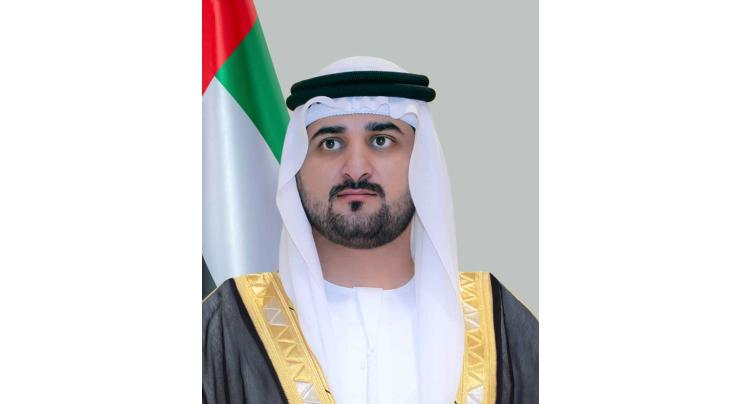
H.H. Sheikh Maktoum bin Mohammed bin Rashid Al Maktoum, First Deputy Ruler of Dubai, Deputy Prime Minister and Minister of Finance of the UAE, stated, “The UAE will continue to solidify and upgrade its advanced economic system while driven by a long-term vision and sustainable financial planning, under the wise leadership of President His Highness Sheikh Mohamed bin Zayed Al Nahyan and His Highness Sheikh Mohammed bin Rashid Al Maktoum, Vice President, Prime Minister and Ruler of Dubai.”
“Over the past decades, the UAE has successfully built a strong and agile financial system, enabling the country to achieve leading development milestones and adapt to global economic shifts. This progress will undoubtedly contribute to achieving the national aspirations outlined in ‘We the UAE 2031’ and the UAE Centennial 2071,” Sheikh Maktoum said.
H.H. Sheikh Maktoum bin Mohammed added, “Public debt management stands out as a strategic tool to strike a balance between spending efficiency and resource sustainability. It plays a key role in creating a robust and attractive financial and investment environment by developing an efficient, transparent, and diversified sovereign debt market. This would not only contribute to enhancing financial system stability but would also provide policymakers with greater flexibility in addressing economic challenges.”
H.H. Sheikh Maktoum noted that, in light of accelerating global economic and technological transformations, the UAE has adopted a proactive approach that combines economic ambition with fiscal discipline. Public debt management, Sheikh Maktoum said, is fundamental to strengthening the country’s ability to maintain strong credit ratings, diversify funding sources, and support the sustainability of long-term growth.
He emphasised that the achievements recorded by the UAE in both domestic and international debt markets were the results of a clear vision and a comprehensive institutional approach that prioritises close collaboration across all government entities.
He noted that hedging and risk management strategies are integral components of this model, enhancing the UAE’s capacity to address its financing requirements while preserving service quality and financial stability, and supporting sustainable prosperity over the long term.
Mohamed bin Hadi Al Hussaini, Minister of State for Financial Affairs, said, “The UAE attaches utmost importance to improving the efficiency of public debt management, viewing it as a fundamental part of its advanced financial framework, and has set out a national vision founded on robust financial governance and forward-looking planning.
“Accordingly, the Ministry of Finance is developing sovereign debt instruments in line with global best practices, reinforcing the UAE’s commitment to achieving sustainable financial stability that supports its development agenda.”
Al Hussaini added that, since the launch of the first federal dirham-denominated issuances, the Ministry has moved steadily to build a transparent, reliable and investment-friendly domestic debt market, providing long-term financing tools that support economic diversification policies, bolster market efficiency, and broaden the investor base both locally and internationally.
He explained that the federal debt strategy is built on striking a balance between reducing borrowing costs and managing risks with flexibility and professionalism. The strategy, he noted, incorporates instrument diversification, maturity distribution, and the implementation of effective hedging policies, critical in navigating an evolving global financial landscape. This framework, he said, has enabled the UAE to maintain stable funding flows that meet its strategic financial needs.
The report includes a comprehensive overview of the federal government’s public debt strategy, and highlights the Ministry of Finance’s success in launching a structured public debt issuance programme, which includes UAE dirham-denominated Treasury Bonds and Islamic Treasury Sukuk.
As of the end of December 2025, a total of 23 auctions for Islamic Treasury Sukuk were conducted, with a total value of AED27 billion, alongside 8 Treasury Bond auctions, totalling AED11.2 billion in issuances, all of which were listed on Nasdaq Dubai.
The report also outlines the performance of the US dollar-denominated international bond programme, which comprised four key issuances in 2021, 2022, 2023, and 2024, with a combined value of $10 billion.
These bonds were listed on the London Stock Exchange and Nasdaq Dubai and achieved subscription rates exceeding five times the offering size.
The report reaffirms that the UAE government has maintained strong sovereign credit ratings from major international agencies, including an Aa2 rating from Moody’s, AA- from Fitch, and AA from S&P Global, all with a stable outlook.
The report also presents the risk management framework adopted by the Public Debt Management Office, which addresses liquidity, market, credit, and operational risks by adeptly using hedging instruments, maturity matching, adherence to regulatory compliance, and robust business continuity planning. It also outlines the institutional and regulatory framework guiding public debt management in the UAE.
The report outlines the performance of the new investment mandate that came into effect in May 2025, in coordination with the Emirates Investment Authority.
The portfolio’s assets are strategically allocated, with 51% in US Treasury bonds and 49% in spread-enhanced products, including 20% in corporate bonds and 15% in asset-backed securities, reflecting a carefully diversified investment strategy for financial resource management.
The report highlights the launch of the Fractional Treasury Sukuk and Bonds Initiative in November 2025, aimed at enabling retail investors to participate in the sovereign debt market with a minimum investment of AED4,000. The initiative successfully attracted approximately 310 investors, with total investments reaching AED7.10 million.
The report sets out key international best practices adopted by the UAE in public debt management, including auction-based securities pricing, the implementation of a Primary dealer code of conduct, and the use of a third-party electronic auction platform, among others.
Overall, the report provides a comprehensive reference, reaffirming the Ministry of Finance’s commitment to strengthening financial sustainability and developing sovereign debt markets through an integrated financial model aligned with the highest international standards of transparency, governance, and risk management.