

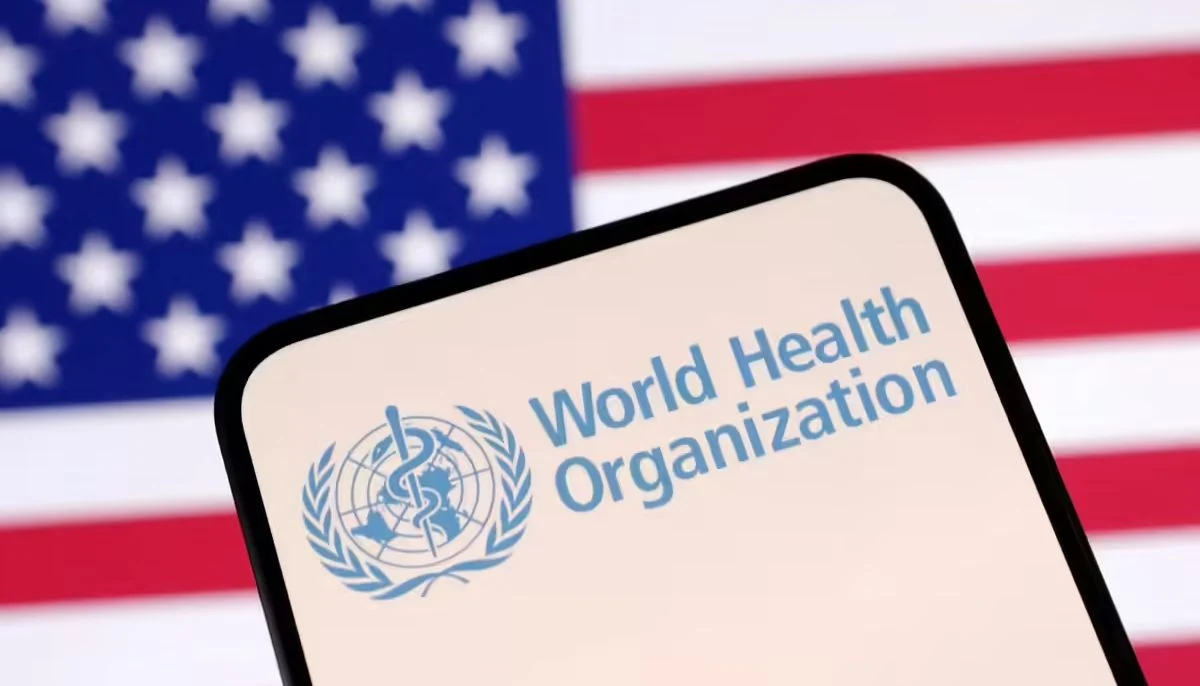
The US is set to officially withdraw from the World Health Organization on Thursday, sending the shockwaves across the global health landscape.
On the first day of Donald Trump’s presidency in 2025, the US President signed an executive order, issuing the notice related to the US’ official exit from WHO.
As per US law, prior to leaving the organization, the country is obliged to pay $260 million in fees that it owes to the UN health agency.
In the withdrawal announcement, the Trump administration blamed the WHO for mishandling the COVID-19, being under political influence of member states, and showing unjustified disposition towards China .
Besides these objections, the US also slammed the WHO for withholding the information that had cost it trillion of dollars, as cited by the US State Department spokesperson.
“The American people have paid more than enough to this organization and this economic hit is beyond a down payment on any financial obligations to the organization,” the spokesperson said by email.
WHO Director-General Tedros Adhanom Ghebreyesus warned in response to withdrawal that the move would make “both the US and the world unsafe, noting that it’s not really the right decision.”
What this departure means for WHO & global health
Budgetary crisis for WHO
The withdrawal of the US from the global health body will push WHO further into a budgetary crisis. Traditionally, the World Health Organization receives 18 percent of its overall funding from America. In the case of a financial crunch, the WHO will shed around a quarter of its health workers by the middle of 2026, putting strain on health services.
Funding gap for Global South
The loss of US contributions, which are roughly $400-$500 million, would cause a funding gap for Global South by slashing the essential health initiatives.
As a result of exit, low and middle income countries will be the hardest hit, which rely on WHO programmes for immunisation, disease control, polio eradication, and HIV/AIDS.
Erosion of multilateralism
The international community is also marred with a myriad of global health challenges, ranging from pandemics, infectious diseases, non-communicable diseases, to rising anti-microbial resistance (AMR). In the face of these challenges, collaborative framework and multilateralism are the need of the hour.
The US’ exit will put international support at risk and bring forth a unilateral sphere of influence, causing the pervasive inequality in healthcare facilities.
For instance, in May 2025, the World Health Assembly adopted the landmark Pandemic Treaty without U.S. participation.
This means the U.S. is no longer at the table for setting global rules on pathogen sharing, vaccine equity, and outbreak responses.
As per experts, China will step in to fill the void left by the US in global health diplomacy.
Information blowback
Lü Xiang, a research fellow at the Chinese Academy of Social Sciences said, “By leaving the WHO, the US would turn itself into an ‘information silo,’ making it difficult to smoothly communicate and coordinate prevention measures if major infectious diseases emerge globally.”
This also goes the other way, if the US would come across such threats, the information gap would put the global public health in risk.
According to Kelly Henning, public health program lead at Bloomberg Philanthropies, a U.S.-based non-profit.
“The U.S. withdrawal from WHO could weaken the systems and collaborations the world relies on to detect, prevent, and respond to health threats.”