

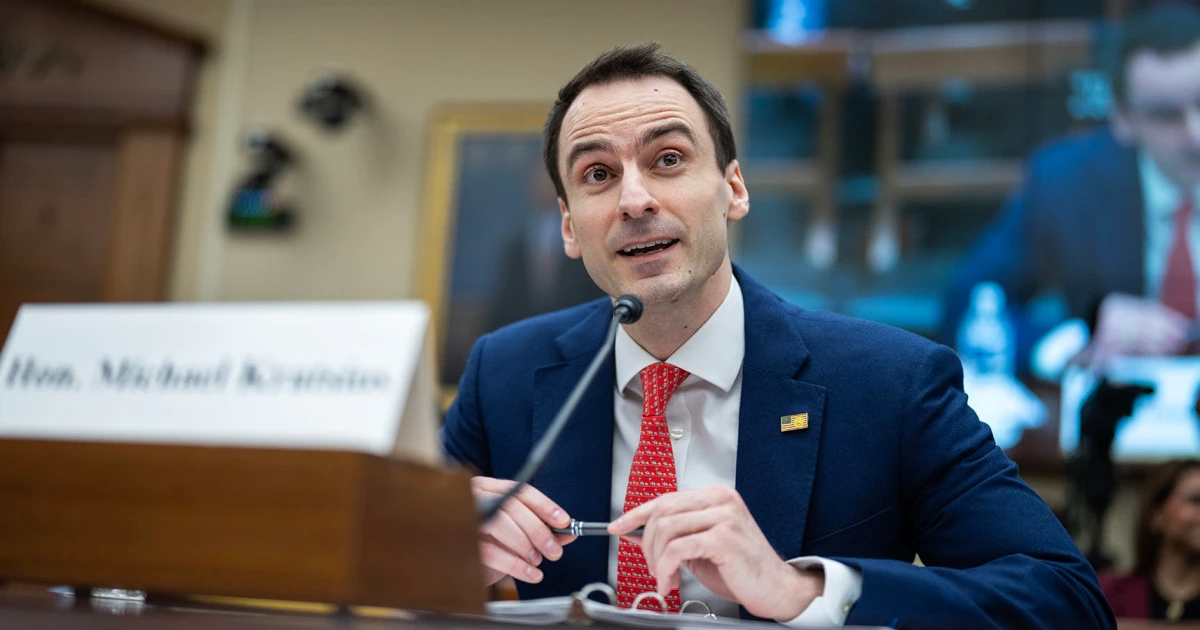
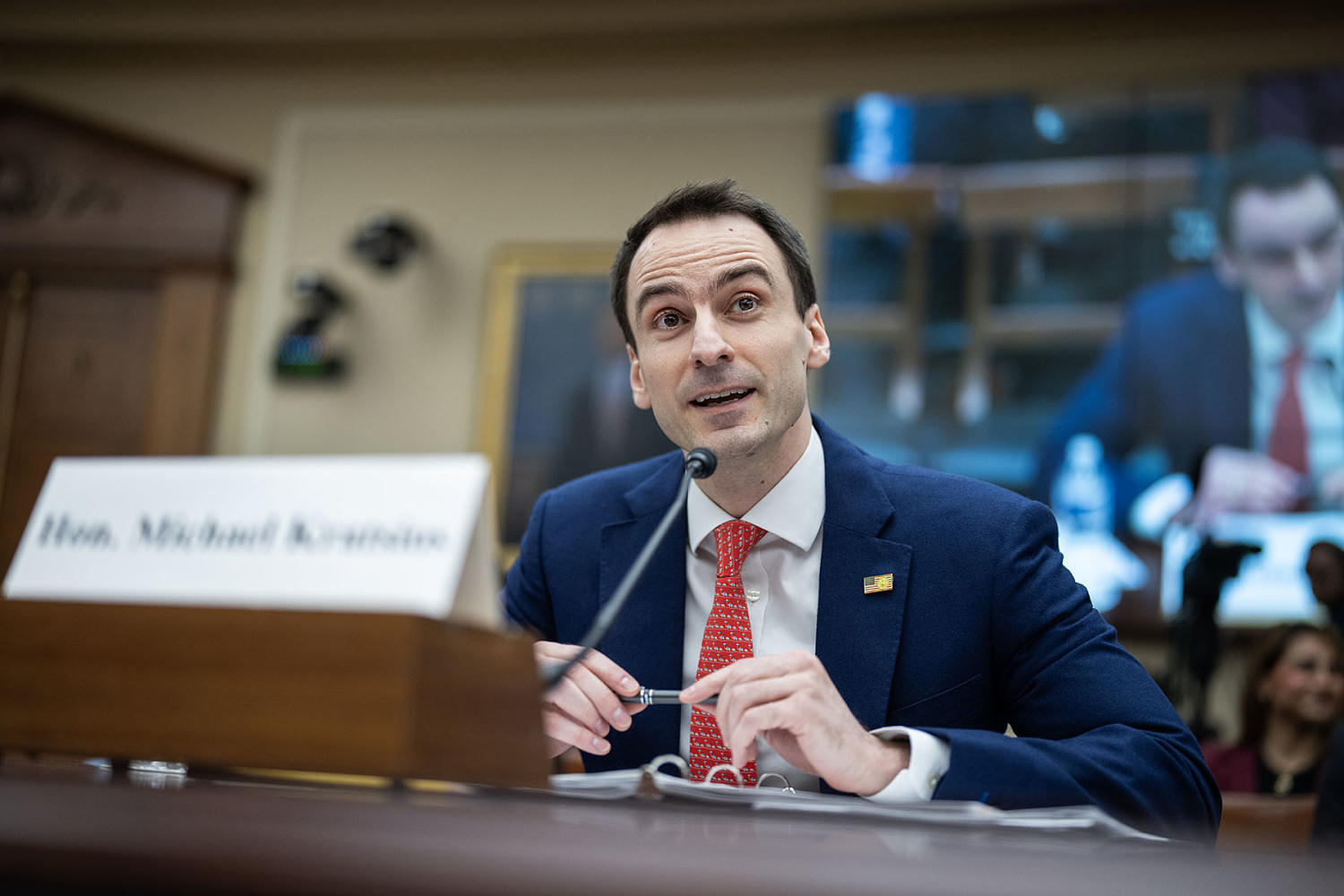
Going into this week’s World Economic Forum in Davos, Switzerland, the White House’s top science and technology adviser, Michael Kratsios, signaled some chilly conversations with European leaders may lie ahead on the topic of artificial intelligence and the way it is regulated.
“I will continue to point out to my tech minister counterparts the ways they can create a regulatory environment to allow AI to thrive,” Kratsios told NBC News, “to make sure they’re not getting ahead of themselves with overburdening regulations, like the EU AI Act, which are an absolute disaster.” For Kratsios, the Trump administration’s light-touch approach to AI regulation is the winning formula.
“There’s been an A-B test for decades on how you lead in technology, and it’s very obvious what the recipe is,” said Kratsios, director of the White House Office of Science and Technology Policy and one of the nation’s leading artificial intelligence advisers.
“We put out probably the most robust, most substantive vision of a pro-innovation AI strategy in the world,” Kratsios said, referencing the White House’s AI Action Plan released in July. “Everywhere we travel, when I meet my fellow tech ministers, they’re all using our language and are all talking about their own AI action plan.”
The administration’s roadmap to American AI dominance, the AI Action Plan is divided into three main sections — innovation, infrastructure and international diplomacy and security. The blueprint emphasizes the reduction of “red tape and onerous regulation” that “unnecessarily hinder AI development or deployment” by rolling back rules and guidance at various federal agencies, many of which were initiated by President Joe Biden’s 2023 executive order on AI.
Though Kratsios might not be a household name, he wields significant influence over the nation’s technological and economic future. Kratsios is a D.C. policy veteran, having overseen all research and development efforts at the Pentagon as undersecretary of defense before moving to the White House to serve as the nation’s chief technology officer during the first Trump administration. A key figure in America’s ongoing AI infrastructure buildout and efforts at the intersection of AI and education, Kratsios spoke to NBC News to reflect on the country’s AI progress at the administration’s one-year mark, and outline his designs for the months ahead.
Kratsios, 39, cut his teeth in the world of private industry, spending much of his early career at Thiel Capital, a venture capital firm founded by Silicon Valley stalwart Peter Thiel. White House AI czar David Sacks and senior policy adviser on AI Sriram Krishnan, also longtime Silicon Valley venture capital magnates, work closely with Kratsios to shape America’s AI agenda.
Eager to encourage the adoption of American AI technology at home and abroad, Kratsios does not mince words about what he sees as bungled approaches to AI policy and stifling overreaches by international bodies.
“The Action Plan very definitively turned the page on AI doomerism and hostility towards AI innovation that had been the hallmark of the Biden administration,” Kratsios said. “The president was very clear during the first couple days of the administration that we had to turn that page and create a plan that would ensure the U.S. leads the world in AI.”
Kratsios is clear that the Trump administration’s vision clashes with regulatory structures that have become increasingly visible in the European Union.
The European Union’s AI Act, which Kratsios criticized, imposes varying requirements on AI companies based on the risk posed by their products. The broadest risk evaluation and reporting requirements affect companies like OpenAI, Google and Anthropic, whose powerful foundational models are most likely to present severe or “systemic risks” to society.
“There are so many countries out there that consistently speak about the importance of having an AI economy and an AI ecosystem and making sure that their citizens can actually enjoy the benefits of AI,” Kratsios told NBC News. “We want to be the enabler for that.”
Following an executive order in late July, the Department of Commerce in October unveiled a core element of this agenda with a new program to turbocharge American AI exports. Kratsios views this American AI Export Program as one of his focuses for the coming months and outlined key components of the new push.
Kratsios said the program will seek to offer a tailored approach to exporting hardware and software based on a specific country’s AI needs. “We want to make it as easy as possible for countries around the world to buy our stack and import our stack,” Kratsios said, revealing the Development Finance Corporation and Export Import Bank will provide financing mechanisms for countries to buy a piece of America’s AI ecosystem.
“We have the very best chips, we have the very best models, we have the very best AI applications. And we want to deliver those solutions to countries around the world so that they can actually benefit from them,” said Kratsios.
In a growing rivalry over global AI dominance, some observers see China as having an edge in diffusing its AI products to other countries. Kratsios sees the Export Program as a key mechanism to entice other countries to use American technology in their pursuit of sovereign AI systems. Kratsios said more details about the program will be announced at February’s AI Impact Summit in India.
Kratsios has long been interested in AI, having led the establishment of the American AI Initiative during Trump’s first administration. Between the two Trump administrations, Kratsios worked in a leadership position at Scale AI, a top data annotation company that received a $14.3 billion investment from Meta.
Kratsios places the federal government’s “Genesis Mission” effort to apply AI to critical scientific problems, announced in November, at the heart of the administration’s push for AI-enabled innovation.
“Genesis Mission is the largest marshaling of federal scientific resources since the Apollo mission towards a scientific endeavor,” Kratsios said, noting the effort’s goal of harnessing the federal government’s vast resources and stores of scientific data for AI. “We’ve also seen an incredible amount of demand and enthusiasm from a lot of our partners and allies around the world.”
Over the coming year, Kratsios said Americans can expect to see the creation of a separate “closed AI platform” for the initiative, as Department of Energy official Darío Gil builds out the Genesis Mission’s physical infrastructure.
Beyond the crown jewel of the Genesis Mission, Kratsios says he champions the role of the federal government in encouraging scientific discovery, rejecting any perceived incongruity between the administration’s approach to America’s scientific funding and its embrace of AI.
“We as a scientific enterprise today spend almost a trillion dollars per year in research and development, and the vast majority of that, around 70%, is done by the private sector,” Kratsios said. “If one myopically looks singularly at federal research and development dollars and doesn’t think they’re part of a larger ecosystem, then they’re obviously not going to reap the benefits the American people deserve.”
“’I’m very proud, and this was even in the president’s funding request to Congress, that the areas that are most important to the national agenda, like AI and quantum, were preserved and even plussed up in the budget,” Kratsios said.
Some computing research advocates worry that cuts to the larger scientific R&D ecosystem could harm AI innovation, even if AI research funding is held steady. Last week, a Senate committee working on upcoming federal spending bills pushed back on President Trump’s proposed 22% cut to scientific funding and instead floated a 4% reduction in science financing compared to 2025 spending levels.
The Senate’s counterproposal includes a small increase in funding for the National Institute of Standards and Technology (NIST), which houses critical federal efforts to evaluate and assess how leading AI models function, an effort Kratsios said “can be a tremendous unlock to private sector adoption of AI.”
Trump’s budget requests a $325 million reduction from NIST’s $1.5 billion spending in 2025, citing NIST’s support for “a radical climate agenda,” though it is unclear if these budget cuts would impact NIST’s work on AI.
Kratsios highlighted a recent push to create a new federal framework for AI policy as another key AI win for the private sector and smaller American AI companies, though many advocates of AI oversight remain skeptical that a federal law will sufficiently replace existing state laws.
“Creating a patchwork of AI laws where 50 different states all have different goals is ultimately going to hurt little tech and startups more than anyone else,” Kratsios said, echoing a refrain from Silicon Valley venture capitalists like Marc Andreesen.
President Trump’s executive order from December charged Kratsios, alongside AI czar David Sacks, with preparing legislative recommendations for “a uniform Federal policy framework” that overrides state laws going against the administration’s AI goals. “We’re going to be working very hard over the next year on that framework,” Kratsios said.