


LONDON — Since stepping down as British prime minister in 2007, Tony Blair has pushed back at accusations of war crimes over his country’s invasion of Iraq, apologized for its consequences, and struggled to escape the conflict’s shadow across the Middle East.
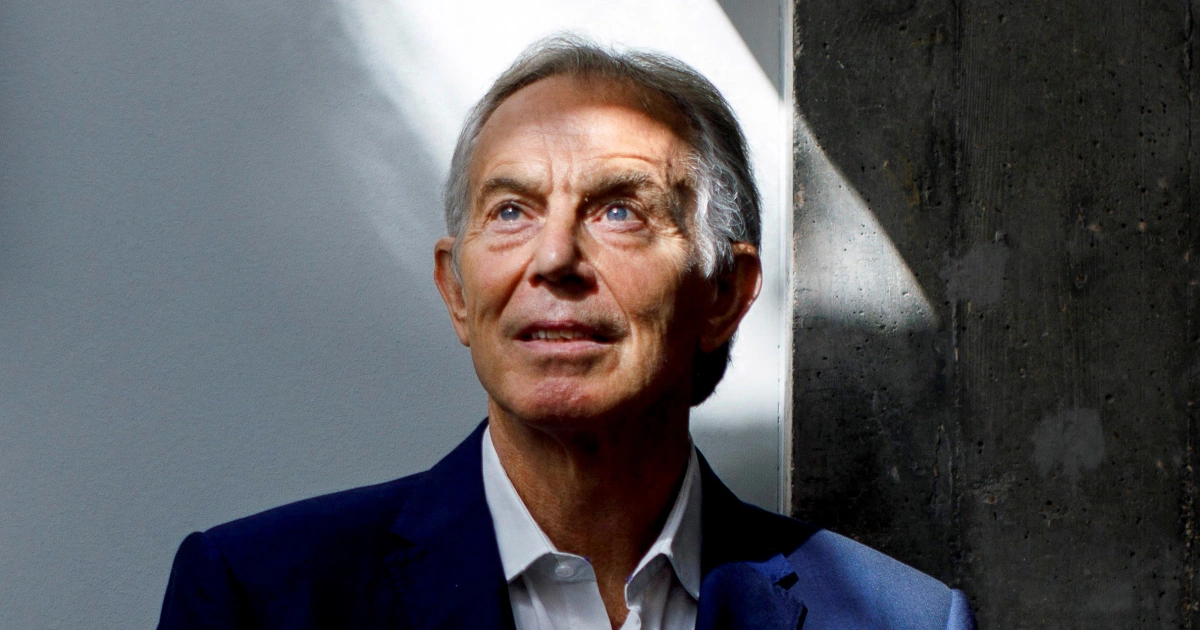
He remains a divisive figure in Britain, but on Friday, the White House named him among the founding members of a “Board of Peace” for Gaza.
He joins a group President Donald Trump has called the “Greatest and Most Prestigious Board ever assembled at any time, any place,” which also includes Trump’s son-in-law Jared Kushner, U.S. Secretary of State Marco Rubio, and Trump’s Middle East envoy Steve Witkoff.
“The Board of Peace will play an essential role in fulfilling all 20 points of the President’s plan, providing strategic oversight, mobilizing international resources, and ensuring accountability as Gaza transitions from conflict to peace and development,” the White House said in a statement Friday.
Day-to-day operations in Gaza are expected to be overseen by a separate technocratic committee, headed by Ali Shaath, a former planning minister in the Palestinian Authority in the occupied West Bank. Shaath has proposed pushing the rubble of destroyed buildings into the sea to create “new land for Gaza.”
Marc Rowan, head of a private equity firm, World Bank chief Ajay Banga, and National Security Adviser Robert Gabriel are also on the board, with additional members to be announced in the coming weeks, according to the White House.
“Each Executive Board member will oversee a defined portfolio critical to Gaza’s stabilization and long-term success,” the White House said.
Several world leaders also indicated they had been offered roles in the process.
Argentinian President Javier Milei, an ally of Trump, thanked the U.S. president on Saturday for an invitation to join the board as a representative for his nation, while Egypt’s Foreign Ministry said its President Abdel Fattah el-Sisi was considering an invitation from Trump to join the board.
A ceasefire has largely held in Gaza since the first phase of the peace plan was unveiled by Trump in October. While the board’s formation marks a new phase in the Trump administration’s vision for long-term peace in the enclave, analysts say its potential impact remains uncertain, while key questions remain about its authority, membership, and its influence on the ground.
Blair won three consecutive elections in Britain between 1997 and 2005 but remains one of the most divisive names in British politics despite having left the stage almost 20 years ago.
Some in Britain laud his landmark achievements, such as introducing the minimum wage, pouring investment into public services and helping secure peace in Northern Ireland. But for many others, his name is a byword for the Iraq War, having relied on flawed intelligence to join President George W. Bush in the 2003 invasion despite strong public opposition in the U.K.
A landmark British 2016 inquiry found the basis for going to war was “far from satisfactory.” After that chastening conclusion, Blair expressed “sorrow, regret and apology” and took “full responsibility without exception or excuse” for the war’s consequences.
Blair, whose post-Iraq career includes a stint as global Middle East envoy, “is very divisive,” said Fawaz Gerges, professor of international relations at the London School of Economics.
“He carries heavy baggage,” he told NBC News. “Many Iraqis and many Arabs and many Muslims and many human rights organizations have accused Tony Blair of having blood on his hands.”
Blair’s position “as hardcore an advocate of Israel as the other six Americans on the board,” Gerges added, “does not really send a reassuring message to either Palestinians or Arabs.”
Israel and Hamas have both accused each other of breaching the ceasefire and failing to honor their commitments under the agreement. Nearly 450 Palestinians have been killed since the ceasefire began, according to the Gaza Health Ministry.
The disarmament of Hamas and the future governance of Gaza have proved sticking points in earlier negotiations, while it also remains unclear when Israel would withdraw further beyond the “yellow line” inside Gaza that currently marks the area it still controls.
The U.S. has pushed forward with the next phase of its plan for peace in Gaza, moving toward “demilitarization, technocratic governance, and reconstruction,” Witkoff said Wednesday, without offering details of immediate further steps that might overcome hurdles in negotiations.
Yossi Mekelberg, a senior consulting fellow with the Middle East and North Africa Program at the U.K think tank Chatham House, said that it was too early to predict the impact of the board, which for now amounted only to a “list of names,” with little clarity on how power, budgets or decision-making would work in practice.
Speaking to NBC News, he acknowledged that those involved may have good intentions, but what matters is “what happens to the people of Gaza,” stressing that any rebuilding effort must be led by Palestinians and supported, rather than dictated, by the international community.
“If this board of peace is ready to do that, fine, let them do that,” he said.