


EXPLAINER
‘Butcher of Hama’ and former Syrian vice president, convicted of money laundering in France and accused of war crimes in Switzerland, has died at age 89.
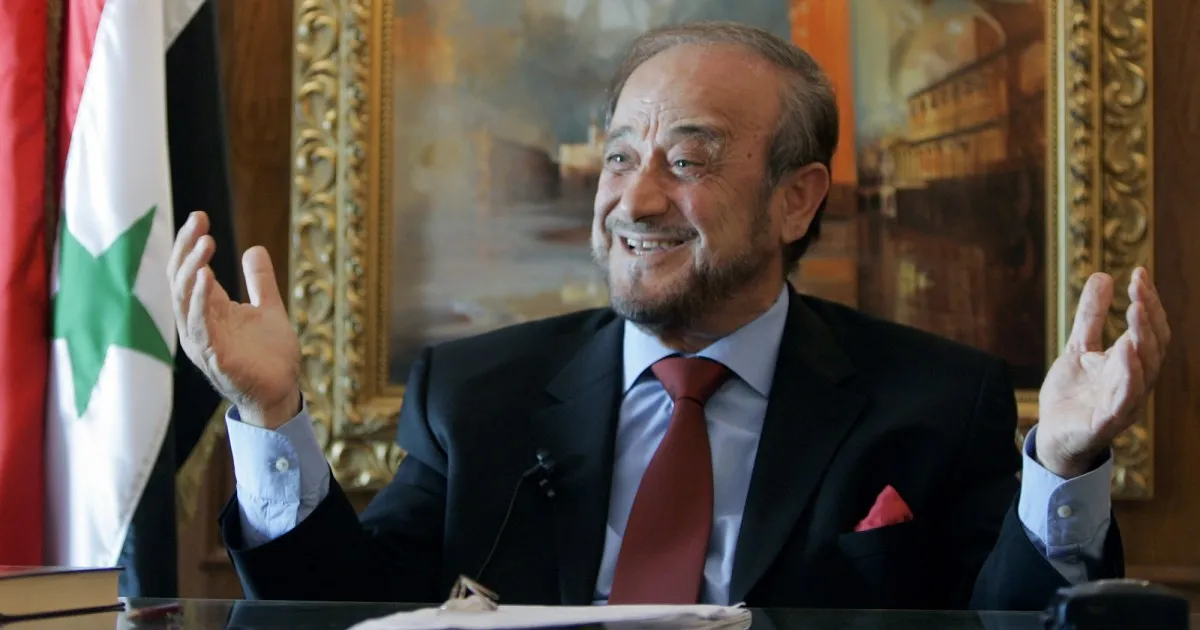
Rifaat al-Assad, the uncle of ousted Syrian President Bashar al-Assad and the former commander of the paramilitary “Defence Companies” (Saraya al-Difa), has died in the United Arab Emirates at the age of 89.
The Reuters news agency cited two sources confirming his death on January 21, 2026. Rifaat had reportedly fled from Beirut to Dubai following the collapse of the Assad regime and the flight of his nephew to Russia in December 2024.
Born in Qardaha, northwestern Syria, in 1937, Rifaat, a member of the country’s Alawite minority, was a central figure in the establishment of the Assad family’s rule in the 1970s. But he fell out with his brother, former President Hafez al-Assad, following a failed coup attempt in the early 1980s.
Here is a brief timeline of the main events during the life and career of the man known as the “Butcher of Hama”.
The Hama massacre
Rifaat was notorious for his role in the 1982 crackdown on the city of Hama to suppress an uprising by the Muslim Brotherhood.
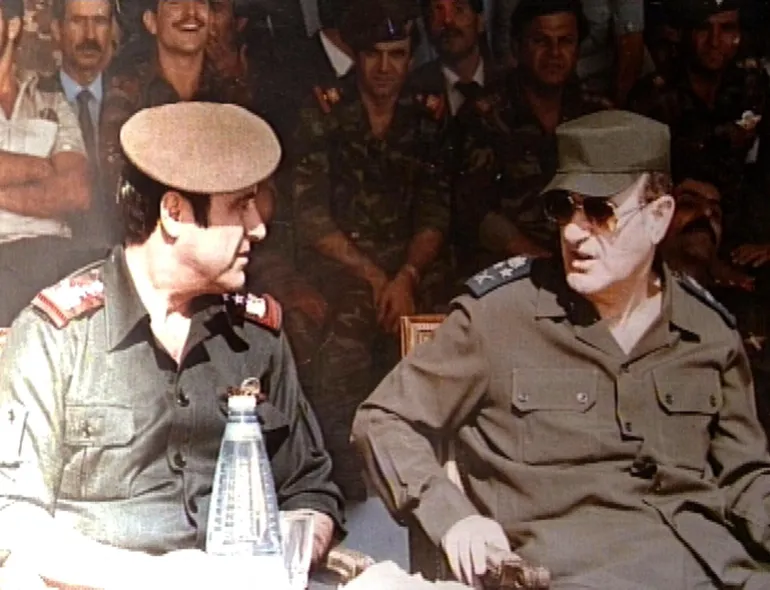
Commanding the Defence Companies – a force of approximately 40,000 soldiers independent of the regular army – Rifaat led a siege on the city that lasted nearly a month. The operation involved heavy shelling and ground assaults.
According to a 2022 report by the Syrian Network for Human Rights, the campaign resulted in approximately 40,000 deaths, and 17,000 people went missing. The assault destroyed entire neighbourhoods, including 79 mosques and three churches.
In a 2011 televised interview, Rifaat denied responsibility for the events, claiming he “did not know Hama” and attributing the orders to his brother, Hafez.
Rifaat’s rise to power – and a failed coup
Rifaat joined the Baath party in 1952 and rose through the military ranks. He played a key security role in the 1970 coup, which brought overthrew the former head of state, Salah Jadid, and brought Hafez al-Assad to power.
In the late 1970s, as the regime faced internal opposition, Rifaat advocated for extreme measures. In a 1979 speech at a Baath party congress, he reportedly suggested “Stalinist” methods to purge opposition and proposed closing mosques to curb “sectarian ideology”.
His influence peaked in the early 1980s, but tensions with his brother were mounting. In November 1983, while Hafez was ill, Rifaat attempted to seize control, deploying his own forces in Damascus. The confrontation ended in a standoff.
By 1984, Hafez had regained control. Rifaat was stripped of his command, appointed to the ceremonial post of vice president and sent into exile. Reports at the time suggested he received $200m from Libyan leader Muammar Gaddafi as part of a settlement to leave the country.
Exile and legal troubles
Rifaat spent the next 36 years primarily in Europe, where he faced multiple legal challenges over the source of his wealth.
- France: In 2020, a French court sentenced him to four years in prison for money laundering and misappropriation of Syrian public funds, confiscating real estate assets worth an estimated $100m.
- Switzerland: In August 2023, the Swiss Federal Criminal Court issued an arrest warrant for Rifaat for his alleged role in war crimes committed in Hama in 1982.
- Assets Frozen: Authorities in the UK and Spain also froze family assets and investigated him for illicit financial activities.
Return and death
To avoid imprisonment in France, Rifaat returned to Syria in October 2021. Despite his previous calls in 2011 for Bashar al-Assad to step down, he appeared voting for his nephew in the May 2021 election at the Syrian embassy in Paris.
Following the fall of the Assad government in December 2024, Lebanese security officials reported that Rifaat had left Syria for Dubai, where he passed away in January 2026.