

In the nuclear age, the United States has to refrain from all-out war since it can easily lead to nuclear escalation. Instead, it wages hybrid wars.
In recent weeks, we have witnessed two such conflicts: in Venezuela and Iran. Both have been waged through a combination of crushing economic sanctions, targeted military strikes, cyberwarfare, stoking unrest and unrelenting misinformation campaigns. Both are long-term CIA projects that have recently escalated. Both will lead to further chaos.
The US has long had two goals vis-a-vis Venezuela: to gain control over its vast oil reserves in the Orinoco Belt and to overthrow its leftist government, which has been in power since 1999. America’s hybrid war against Venezuela dates to 2002 when the CIA helped to support a coup attempt against President Hugo Chavez. When that failed, the US ramped up other hybrid measures, including economic sanctions, the confiscation of Venezuela’s dollar reserves and measures to cripple Venezuela’s oil production, which eventually collapsed. Despite the chaos sown by the US, the hybrid war did not bring down the government.
US President Donald Trump has now escalated to bombing Caracas, kidnapping President Nicolas Maduro, stealing Venezuelan oil shipments and imposing a naval blockade, which, of course, is an act of war. It also seems likely that Trump is thereby enriching powerful pro-Zionist campaign funders who have their eyes on seizing Venezuelan oil assets.
Zionist interests also have their eye on toppling the Venezuelan government since it has long supported the Palestinian cause and maintained close relations with Iran. Israeli Prime Minister Benjamin Netanyahu has cheered on the US attack on Venezuela, calling it the “perfect operation”.
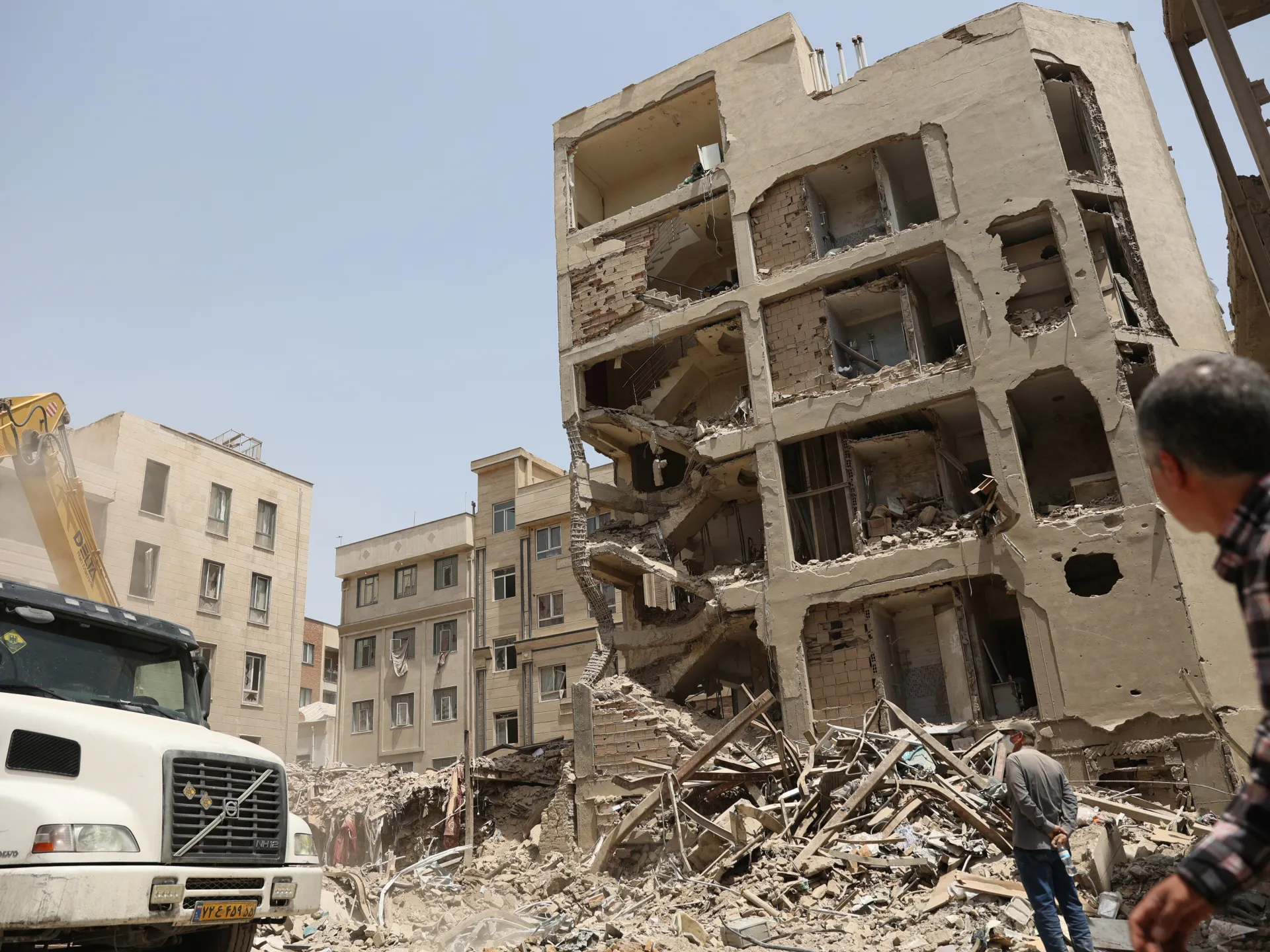
The United States along with Israel is also simultaneously escalating its ongoing hybrid war against Iran. We can expect US and Israeli subversion, air strikes and targeted assassinations. The difference with Venezuela is that the hybrid war on Iran can easily escalate into a devastating regional war, even a global one. US allies in the region, especially the Gulf countries, have been engaged in intensive diplomatic efforts to persuade Trump to back down and avoid military action.
The war on Iran has a history even longer than the war on Venezuela. The first US intervention in the country dates back to 1953 when democratically elected Prime Minister Mohammad Mossadegh nationalised Iran’s oil in defiance of the Anglo-Persian Oil Company (today’s BP).
The CIA and MI6 orchestrated Operation Ajax to depose Mossadegh through a mix of propaganda, street violence and political interference. They reinstated Mohammed Reza Pahlavi, who had fled the country, fearing Mossadegh, and helped the shah solidify his grip on power. The CIA also supported the shah by helping create his notorious secret police, SAVAK, which crushed dissent through surveillance, censorship, imprisonment and torture.
Eventually this repression led to a revolution that swept Ayatollah Ruhollah Khomeini to power in 1979. During the revolution, students seized US hostages in Tehran after the US admitted the shah for medical treatment, leading to fear that the US would try to reinstall him in power. The hostage crisis further poisoned the relations between Iran and the US.
From then onwards, the US has plotted to torment Iran and overthrow its government. Among the countless hybrid actions the US has undertaken was funding Iraq in the 1980s to wage war on Iran, leading to hundreds of thousands of deaths but failing to topple the government.
The US-Israeli objective vis-a-vis Iran is the opposite of a negotiated settlement that would normalise its position in the international system while constraining its nuclear programme. The real objective is to keep Iran economically broken, diplomatically cornered and internally pressured. Trump has repeatedly undercut negotiations that could have led to peace, starting with his withdrawal from the 2016 Joint Comprehensive Plan of Action (JCPOA), an agreement that had seen Iran’s nuclear energy activities monitored and economic sanctions removed.
Understanding the hybrid war tactics helps to explain why Trump’s rhetoric oscillates so abruptly between threats of war and false offers of peace. Hybrid warfare thrives on contradictions, ambiguities and outright deceit.
Last summer, the US was supposed to have negotiations with Iran on June 15 but supported Israel’s bombing of the country two days earlier. For this reason, signs of de-escalation in recent days should not be taken at face value. They can all too readily be followed by a direct military attack.
The examples of Venezuela and Iran demonstrate just how addicted the US and Israel are to hybrid warfare. Acting together, the CIA, Mossad, allied military contractors and security agencies have fomented turmoil across Latin America and the Middle East for decades.
They have upended the lives of hundreds of millions of people, blocked economic development, created terror and generated mass refugee waves. They have nothing to show for spending billions on covert and overt operations beyond the chaos itself.
There is no security, no peace, no stable pro-US or pro-Israel alliance, only suffering. In the process, the US is also going out of its way to undermine the United Nations Charter, which it brought to life in the aftermath of World War II. The UN Charter makes clear that hybrid warfare violates the very basis of international law, which calls on countries to refrain from the use of force against other countries.
There is one beneficiary of hybrid war, and that is the military-tech industrial complex in the US and Israel. US President Dwight Eisenhower warned us in his 1961 farewell address of the profound danger of the military-industrial complex to society. His warning has come to pass even more than he imagined as it is now powered by artificial intelligence, mass propaganda and a reckless US foreign policy.
The world’s best hope is that the other 191 countries of the UN besides the US and Israel finally say no to their addiction to hybrid war: no to regime-change operations, no to unilateral sanctions, no to the weaponisation of the dollar and no to the repudiation of the UN Charter.
The American people do not support the lawlessness of their own government, but they have a very hard time making their opposition heard. They and almost all the rest of the world want the US deep state brutality to end before it’s too late.
The views expressed in this article are the authors’ own and do not necessarily reflect Al Jazeera’s editorial stance.