


CARACAS, Venezuela: Venezuela was set to hold talks on Saturday with US envoys in Caracas on restoring diplomatic ties, days after US forces deposed Nicolas Maduro as its president.
Venezuela said Friday it had launched discussions with US diplomats in the capital, the latest sign of cooperation following the leftist leader’s capture and US President Donald Trump’s claim to be “in charge” of the South American country.
Officials said the US envoys were in Caracas to discuss reopening the country’s embassy, while in Washington Trump met with oil companies over his plans to access Venezuela’s huge crude reserves.
The government of interim President Delcy Rodriguez “has decided to initiate an exploratory diplomatic process with the government of the United States of America, aimed at re-establishing diplomatic missions in both countries,” Foreign Minister Yvan Gil said in a statement.
John McNamara, the top US diplomat in neighboring Colombia, and other personnel “traveled to Caracas to conduct an initial assessment for a potential phased resumption of operations,” a US official said on customary condition of anonymity.
Venezuela said it would be reciprocating by sending a delegation to Washington.
Rodriguez in a statement condemned “the serious, criminal, illegal and illegitimate attack” by the United States and vowed: “Venezuela will continue to confront this aggression through the diplomatic route.”
Trump vows oil investments
Trump said earlier Friday that he had called off a second wave of attacks on Venezuela due in part to the release of political prisoners.
The US president had suggested he might use force again to get his way in Venezuela, which has the world’s largest proven oil reserves.
At a White House meeting on Friday, he pressed top oil executives to invest in Venezuela’s reserves, but was met with a cautious reception — with ExxonMobil chief executive Darren Woods dismissing the country as “uninventable” without sweeping reforms.
Trump earlier said that oil companies promised to invest $100 billion in Venezuela, whose oil infrastructure is creaky after years of mismanagement and sanctions.
He had earlier announced a plan for the United States to sell between 30 million and 50 million barrels of Venezuelan crude, with the money to be used at his discretion.
He promised any funds sent to Caracas would be used to buy only US-made products.
In the meanwhile, Washington has maintained maritime pressure on oil tankers in the Caribbean, where it seized a fifth tanker carrying Venezuelan crude — oil that would be sold, Trump said.
State-owned oil company PDVSA confirmed in a statement that one vessel was returning to Venezuelan waters, describing it as the “first successful joint operation” with Washington.
Prisoners’ release
Anxious relatives waited outside Venezuelan jails for a glimpse of their loved ones as the authorities began releasing political prisoners — a move Washington claimed credit for.
“When I heard the news, I broke down,” said Dilsia Caro, 50, waiting for the release of her husband Noel Flores, who was jailed for criticizing Maduro.
Venezuela began releasing prisoners on Thursday in the first such gesture since US forces removed and detained Maduro in the deadly January 3 raid.
Protests in Caracas
Maduro was seized in a US special forces raid accompanied by airstrikes, operations that left 100 people dead, according to Caracas.
US forces took Maduro and his wife Cilia Flores to New York to face trial on drug-trafficking and other charges.
Rodriguez insisted Thursday her country was “not subordinate or subjugated” despite her pledge to cooperate with Trump.
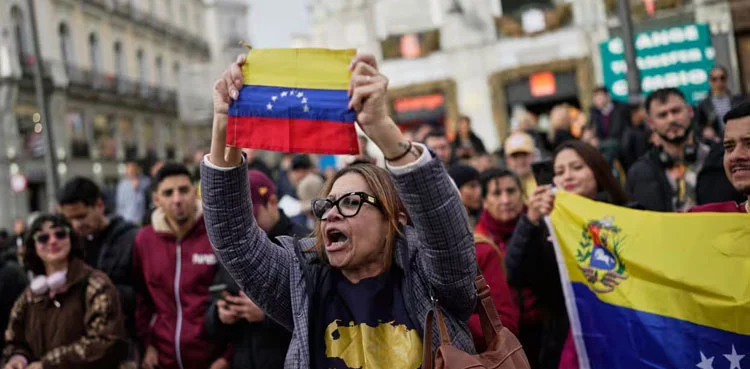
Angry protesters rallied in the streets of Caracas on Friday demanding Maduro’s release in the latest of a daily series of demonstrations.
“We don’t have to give one little drop of oil to Trump after all that he has done to us,” said one protester, Josefina Castro, 70, a member of a civil activists’ group.
“Our Venezuelan brothers died (in the attack), and that hurts.”